|
| |
 ...
Mic Grill
...
Mic Grill
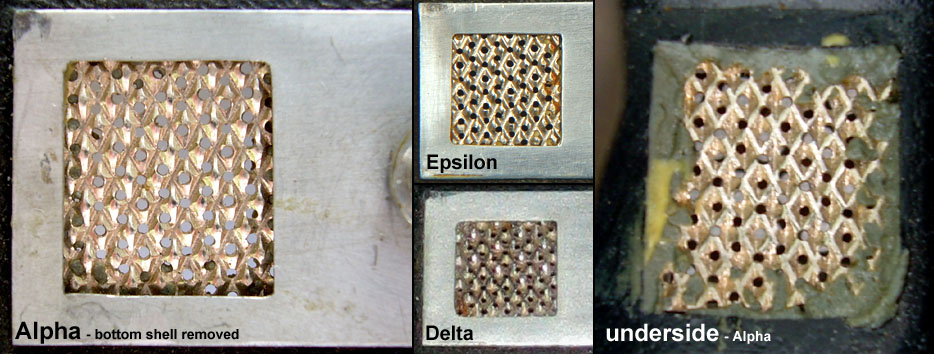
| The diamond-pattern embossed metal sheet with tiny perforated holes that was glued just beneath the control panel... ...is a thin aluminum mesh found covering the speakers of some early-1960's transistor radios. This mesh came in a range of colors and intensities from colorless platinum to a garish deep gold. The three communicators we've seen up close so far all have a distinct pale "peachy" gold color, decidedly on the lighter side of what is the full color intensity/darkness range this material comes in: The embossed diamond pattern has raised peaks on one side, and the small (approx 1/2" x 1/2") squares of the material were glued in Alpha and Epsilon with the diamond peaks up; in Beta and Delta it is inverted (you see diamond depressions instead of peaks). Zeta's mesh material was long ago removed from the shell and is likely lost forever, thus we cannot know of its original orientation. To supply the mic grill in his ten communicators, Wah was able to harvest sufficient material from just a single radio, with even enough left over to put some more of the same into his two tricorders a few weeks later. The grill mesh Wah used differs markedly in the hole spacing from the common material found in the vast majority of other vintage radios. This is how we have been able to conclude that Wah likely stripped down a Coronet 2-Transistor Boy's Radio (or a Coronet-Windsor or a Windsor) to obtain his mesh for the comm mic grills and tricorder vents. The groundbreaking research we conducted on this item is here: |
||
| > > > > The Details - A RARE RADIO SPEAKER MESH CONFIRMS ALPHA < < < < |
||
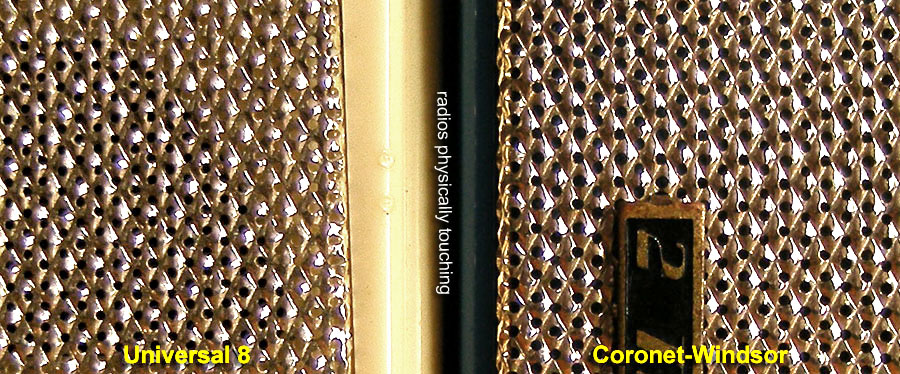
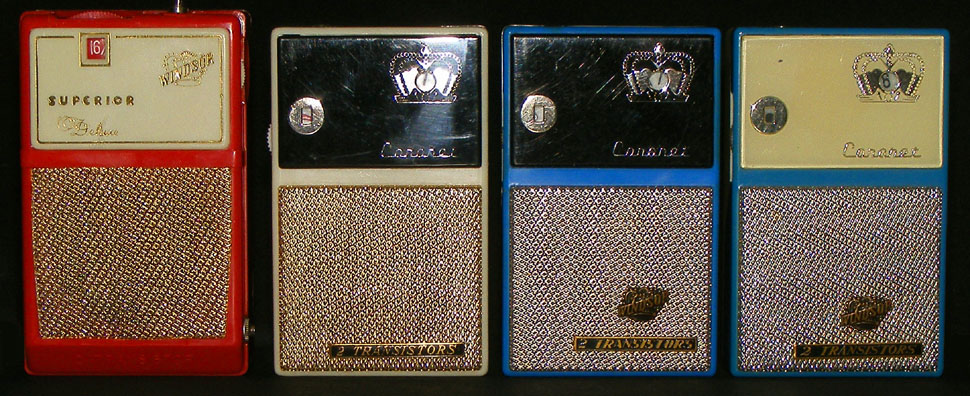
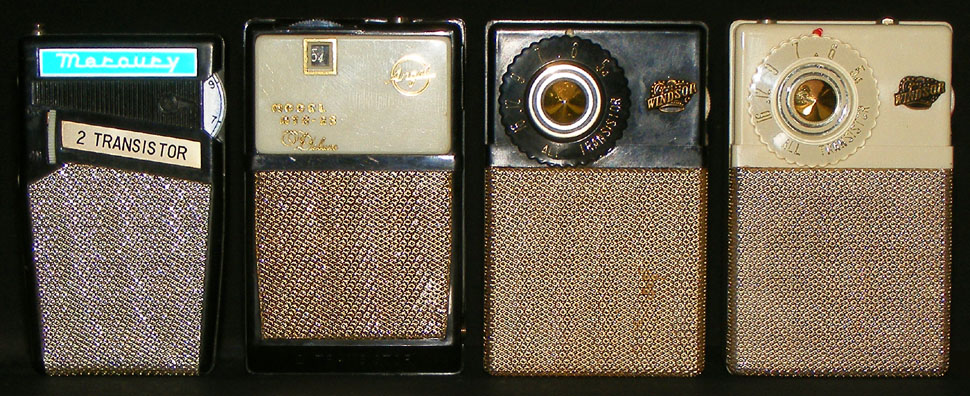
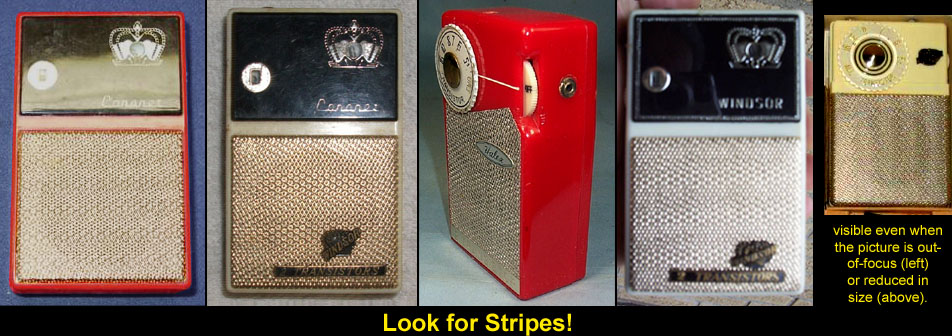
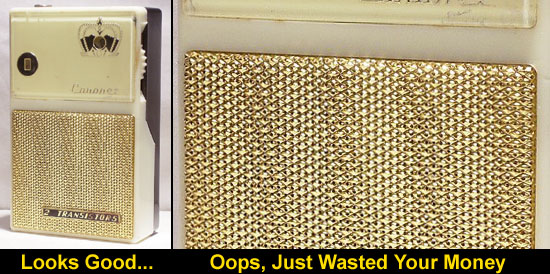
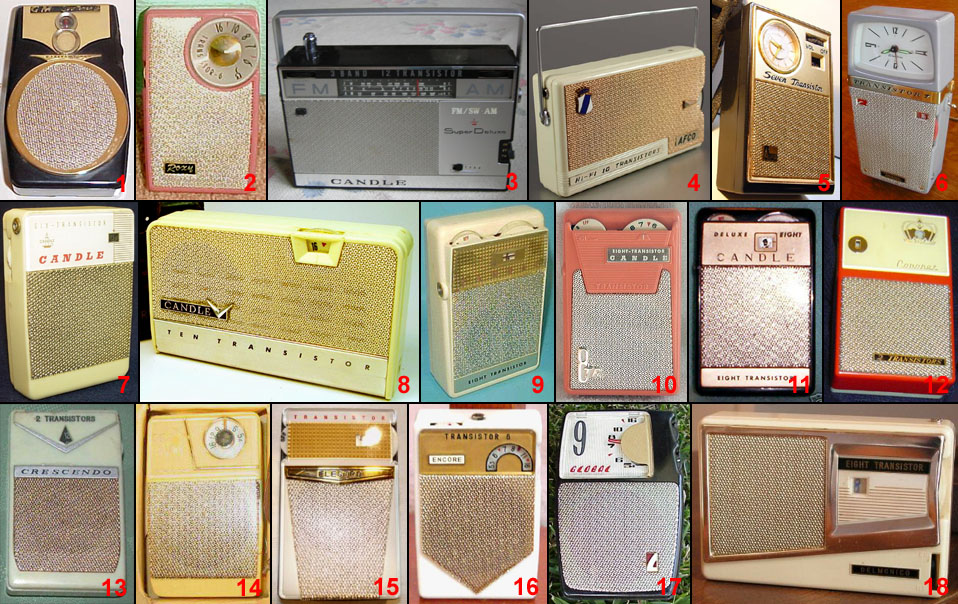
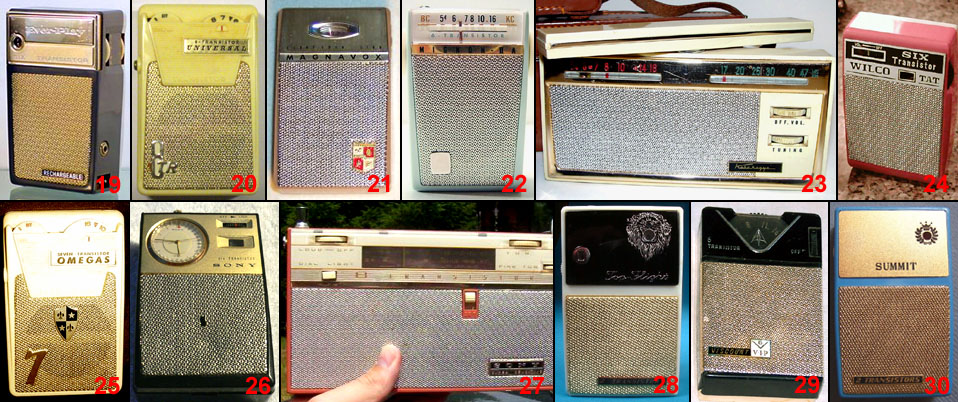
| Many people have assumed prior that a Universal 8 radio or something similar was used, and to be sure the mesh from the Coronet and the Universal appear identical at a distance, but not once up-close. This is how a sample radio of each looks side-by-side, where you can see the greater hole-to-hole spacing of the Coronet vs. the Universal, which has the common tighter hole spacing: Where to Get: If you're going for ultimate accuracy in your replica and thus want one of the few radios with the very rare Wah-authentic mesh, then get to work and be prepared to wait. On average they show up on eBay maybe every other month amidst the hundreds of other 1960s radios up for sale. And the trick is, the model names you will now be seeking (see samples below) still usually come with the standard grill and not the unusual type, making finding the right stuff an exercise in patience and luck. And even when you find the right hole spacing variety, many are too deep a gold color, have their tiny holes too small in diameter, or are dulled in their shine (what Wah used was very shiny). All told, it's a mighty challenge indeed to get one that's dead-on perfect in all aspects. But if you do have some of that luck and patience to spare, there are a couple tricks - described a little further below - to quickly zero you in at least on the correct hard-to-find species. Lots of eyes used, time chewed and money spent over a year yielded the small sample in the first two rows below. Pictured first is a WINDSOR "Superior Deluxe," a CORONET "2 Transistors," and two CORONET-WINDSOR "2 Transistors" in different color schemes. It is these Coronet and Coronet-Windsors that, out of all radios observed, perfectly match in every way the look in the original communicators: Next is a MERCURY "2 Transistor," an ANGEL "Model ATR-23 Deluxe," and two WINDSOR radios in black and cream: Last up is an ANGEL "All Transistor," a HALEX "2-Transistor," a WINDSOR "2 Transistors," and a REALTONE "8-Transistors:" There might be yet more brands out there, but these will be the most common. So as promised, here is how to spot these things even from a distance. First, the right stuff seems to have been installed - for reasons unknown - only on radios labeled as a "2 Transistor Boy's Radio;" words to easily narrow your eBay search. Even better, the correct Wah material shows distinct broad light & dark bands, similar to moiré lines, across the full width due to a repeating alignment of differing hole and diamond patterns. This banding never appears on conventional grills. Usually obvious on even small, fuzzy auction photos, you will see about four sets of stripes, either up/down or left/right depending on how the material was oriented as it was stamped to fit on the radio: Only one cautionary note: just because you see the stripe pattern doesn't mean the holes are staggered the way you want, as in this highly-uncommon rectilinear hole arrangement: Lesson... it is always best to get a close-up photo before you buy. * * * * * If you're instead ok with the passable normal "tight-spaced hole" grill that has been used in replicas for decades, those are a dime a dozen. Guaranteed that right now eBay has some for sale; you just have to find the one you want. Use the search words transistor radio -novelty. Brace yourself for the huge numbers that come up. Most will still be useless to you, so just sort through them to find the gems. Do know that some models of vintage radios are collector's items in their own right, so don't get into a bidding war over the first one you see. $10 to $30 is the normal range for your run-of-the-mill version. The tint of the speaker mesh is often difficult to assess from the seller's photos - do not be shy to ask in advance what it might be. If by chance you end up with a color that is too silver or too gold, a light hit of metallic spray paint of the opposite tint should correct without anyone being the wiser. Another nice thing: one average radio will easily yield enough for many communicators, so you'll have some extra for a rainy day or to sell to a fellow hobbyist. Here are just a few we've seen and jotted down:
1. GM Sportsman, 2. Roxy, 3. Candle
SuperDeluxe, 4. Afco 10-Transistor, 5. Afco
7, 6. Universal 7 w/ clock, 7. Candle 6, 8. Candle
10, 9. Candle 8, 10. Candle 8,
19. Everplay rechargeable, 20. Universal
8, 21. Magnavox 2AM80, 22. Mignon IIA, 23. Kobe
Kogyo8, 24. Wilco 6, 25. Omegas 7, 26. Sony
6, 27. Sony TR815Y, |
||
| Star Trek is a Registered and Copyrighted Trademark of Paramount Pictures. All Rights Reserved. All subject matters referring to Star Trek are trademarks of Paramount Pictures. This website has not been produced or endorsed by Paramount Pictures. Any material belonging to Paramount’s Copyrighted Material that may appear on this site complies with fair and/or acceptable use for the purposes of review, study, criticism, or news reporting. |