|
| |
 ... The Epsilon Dummy
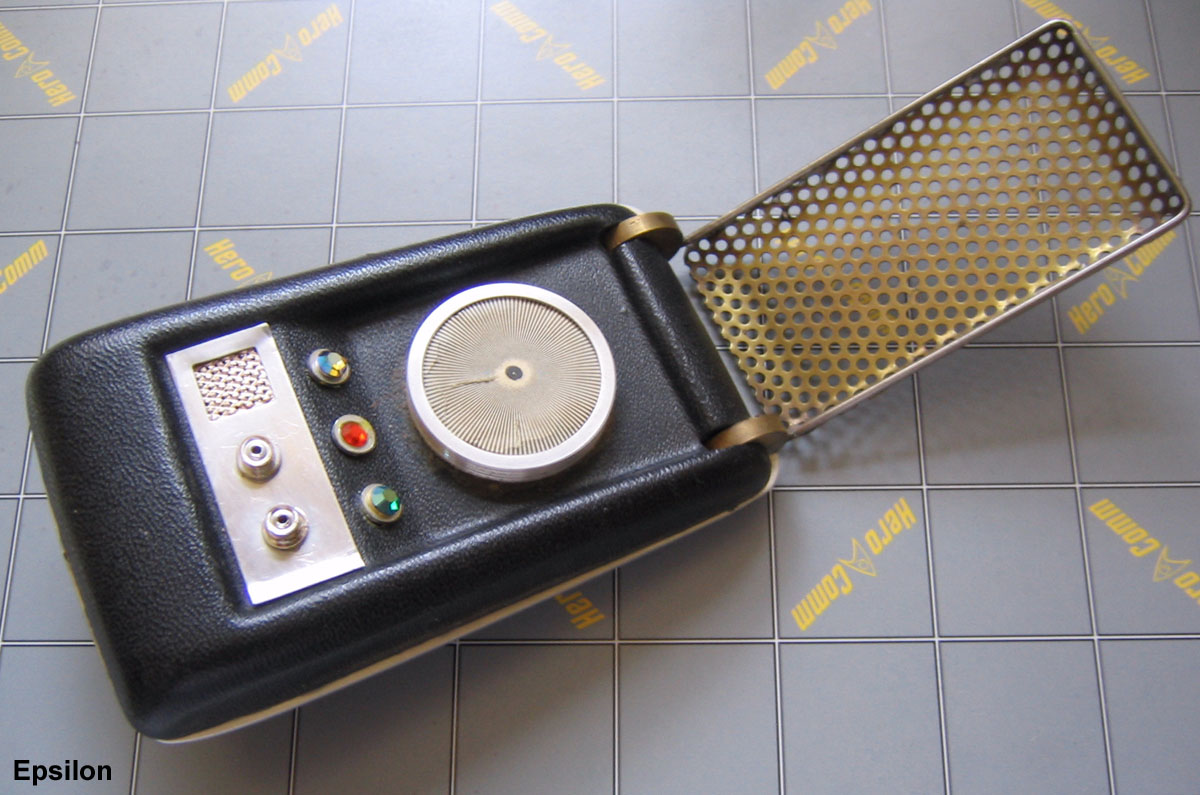
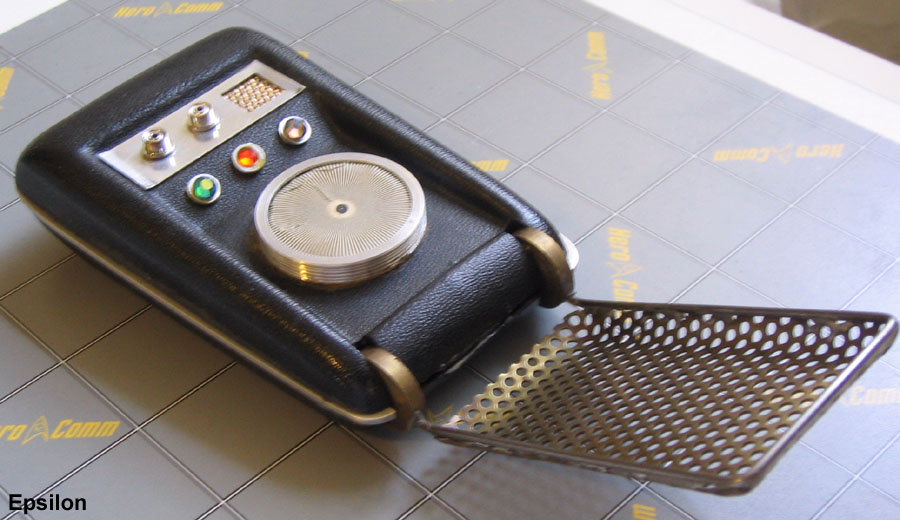
| This communicator seems to have been among the cast's favorites as it was used aplenty in the show. Thought from the start of Season 1 it had a big tarnish blotch on the top surface of the antenna, making it easy to spot on screen. By the third season, the paper moiré pattern was pushed in at the upper-left corner. Then sometime later, it also lost its right knob. This comm was one of four that Set Decorator John Dwyer said he recovered in 1969 from a studio dumpster. Years later we heard he sold it to Mark English, from whom Greg Jein (through unusual means) acquired it. Mr. Jein refurbished the unit; the control panel was polished, a new knob (not the correct type) installed, the antenna got cleaned up and the paper moiré pattern was pushed back into position. |
||
| Pre-"Greg Jein" Refurbishment | ||
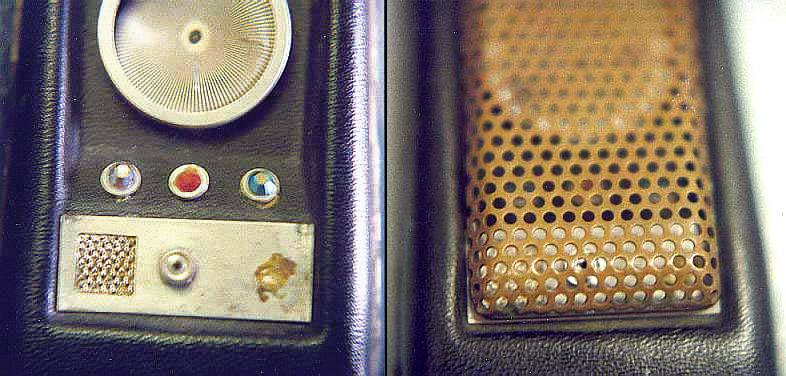 Photo from the late 1980s. (786 x 376) |
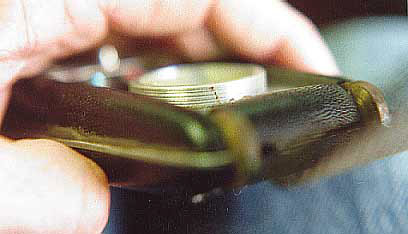 Photo from the late 1980s. (408 x 234) |
|
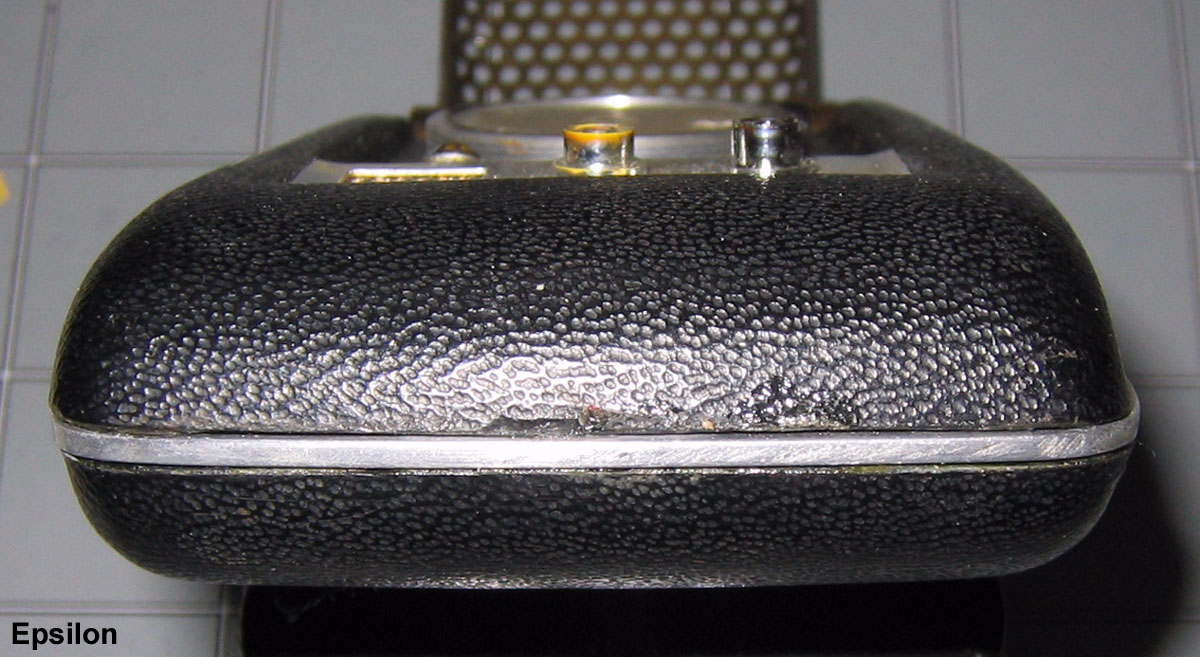
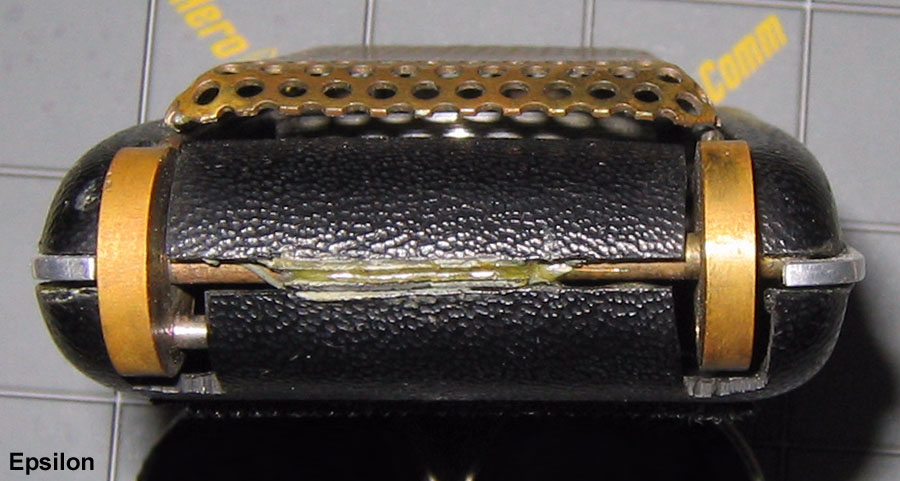
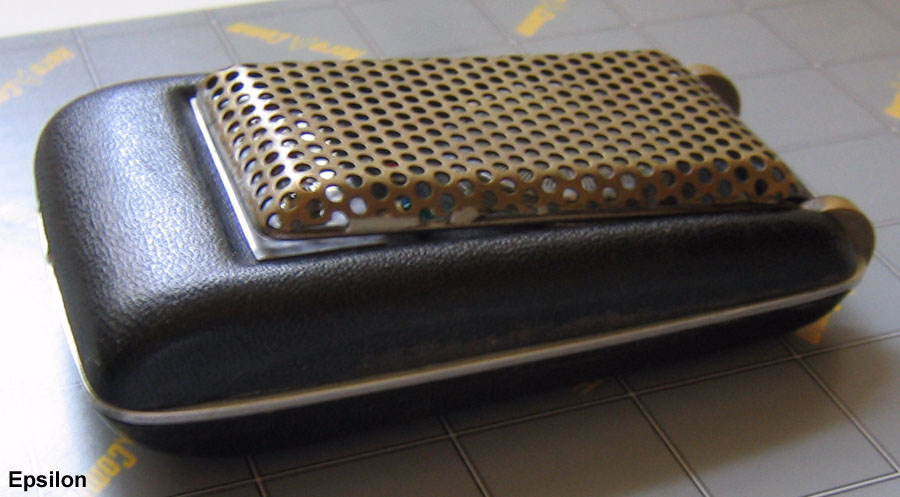
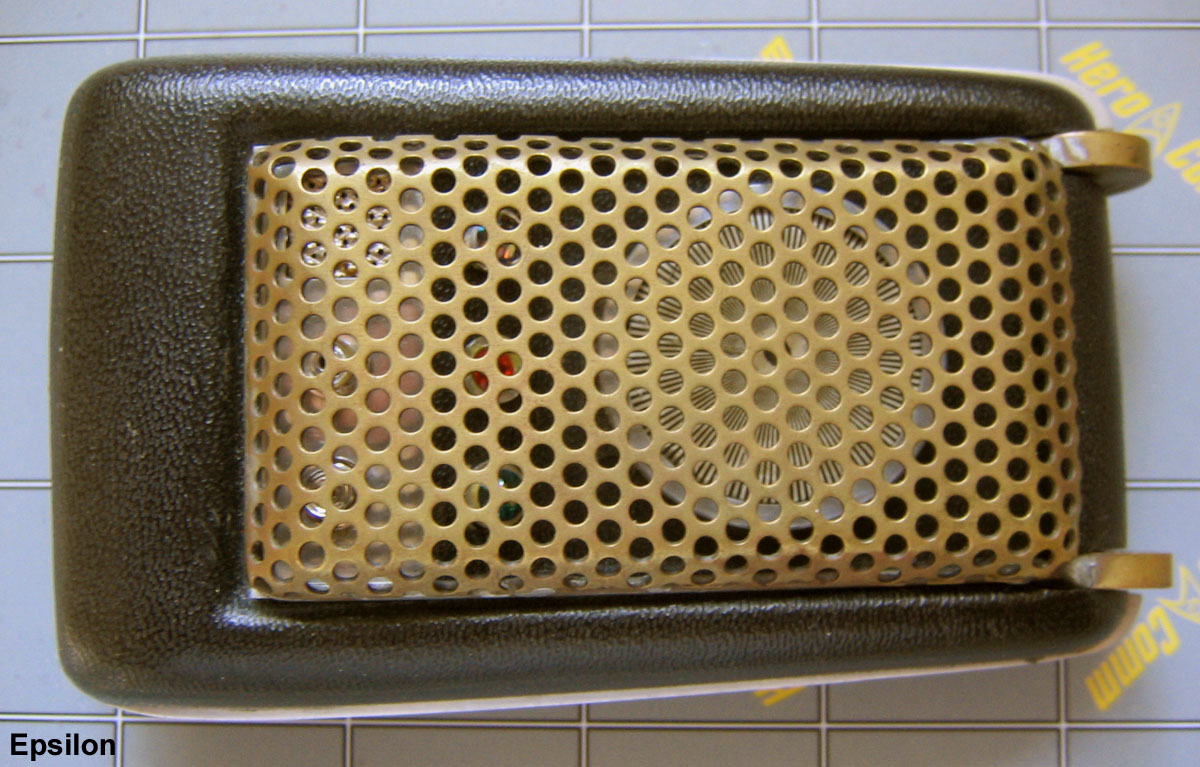
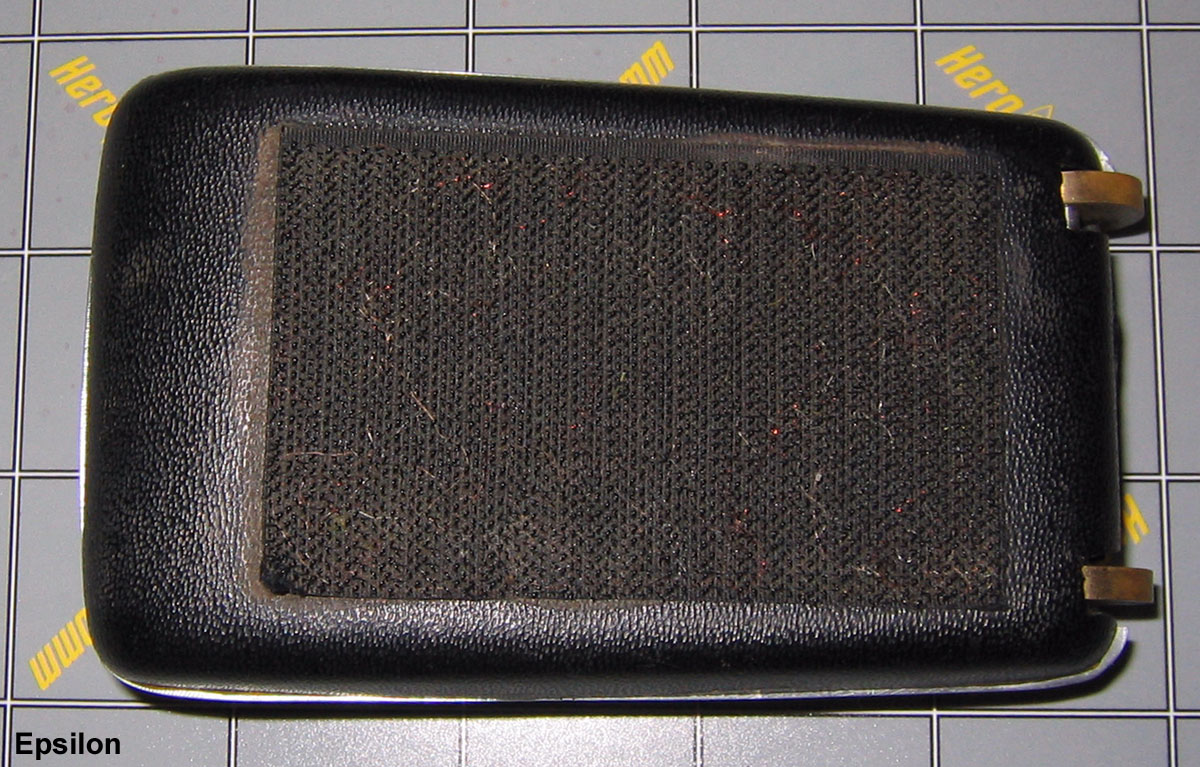
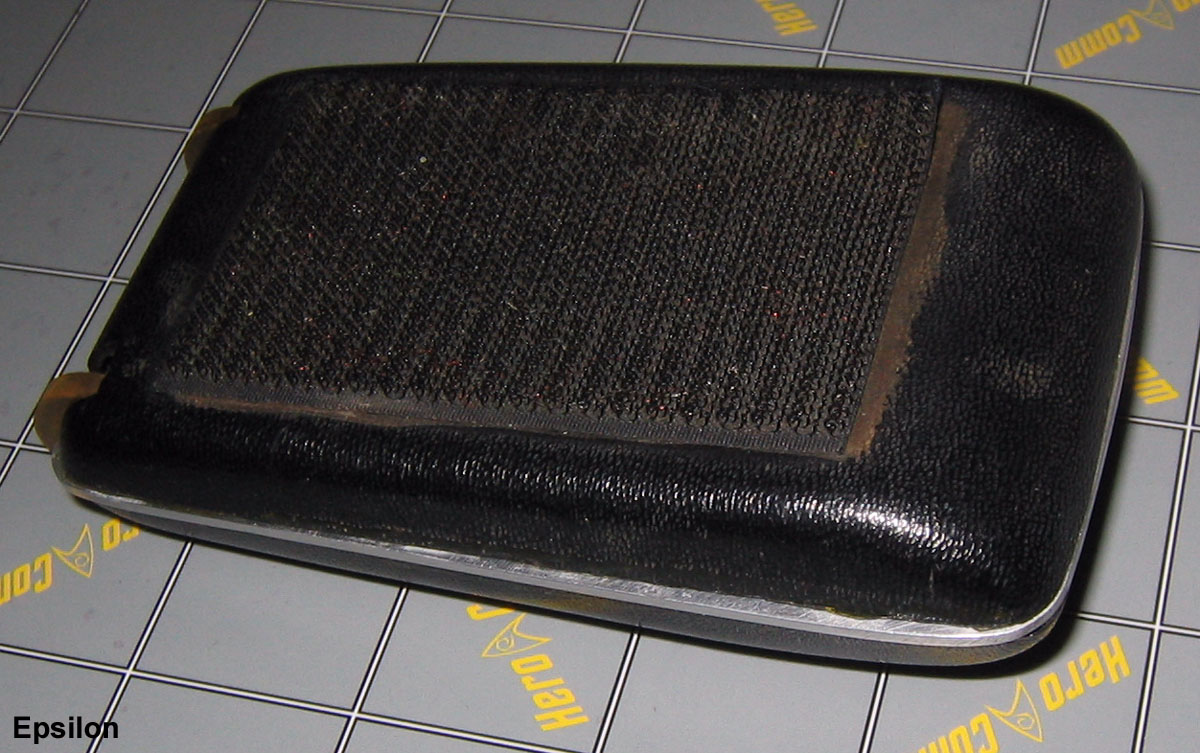
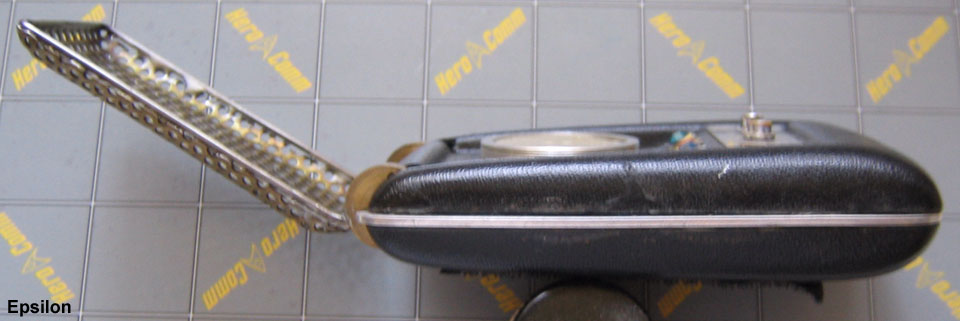
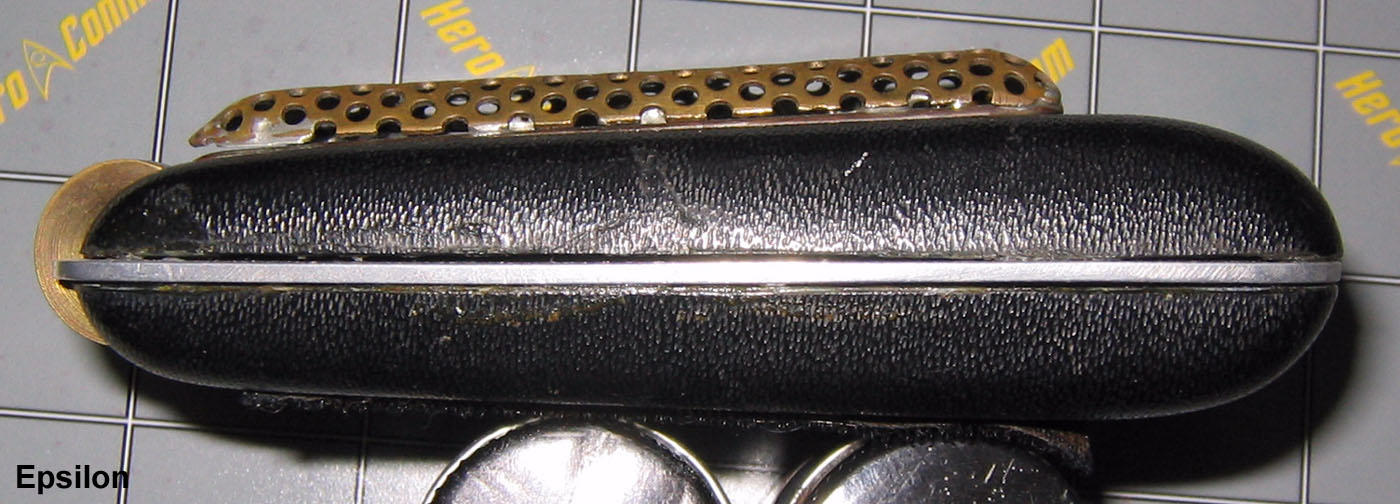
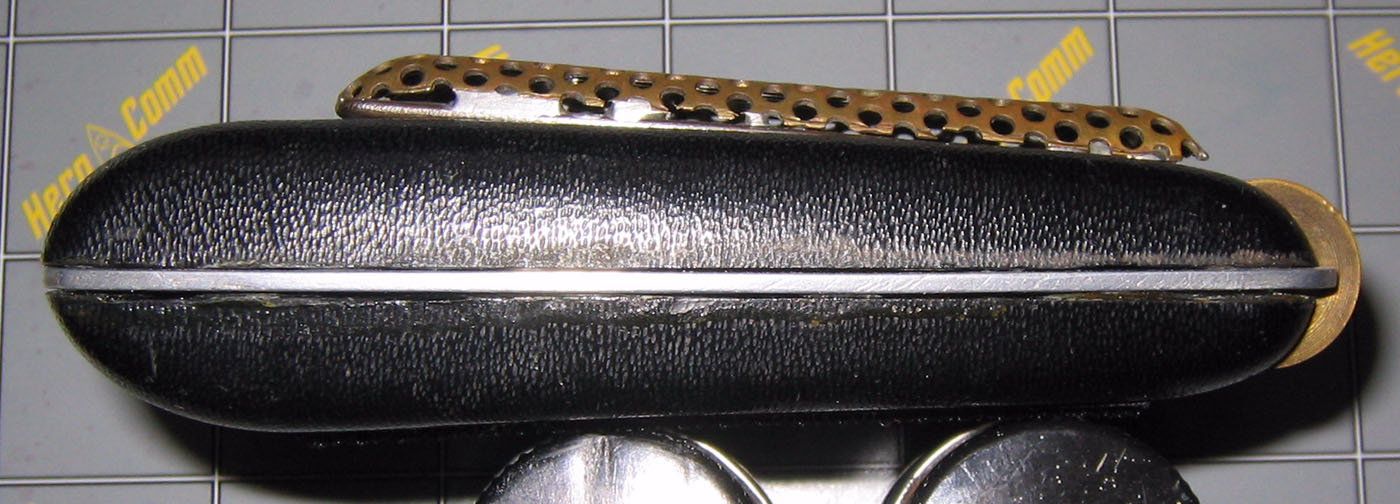
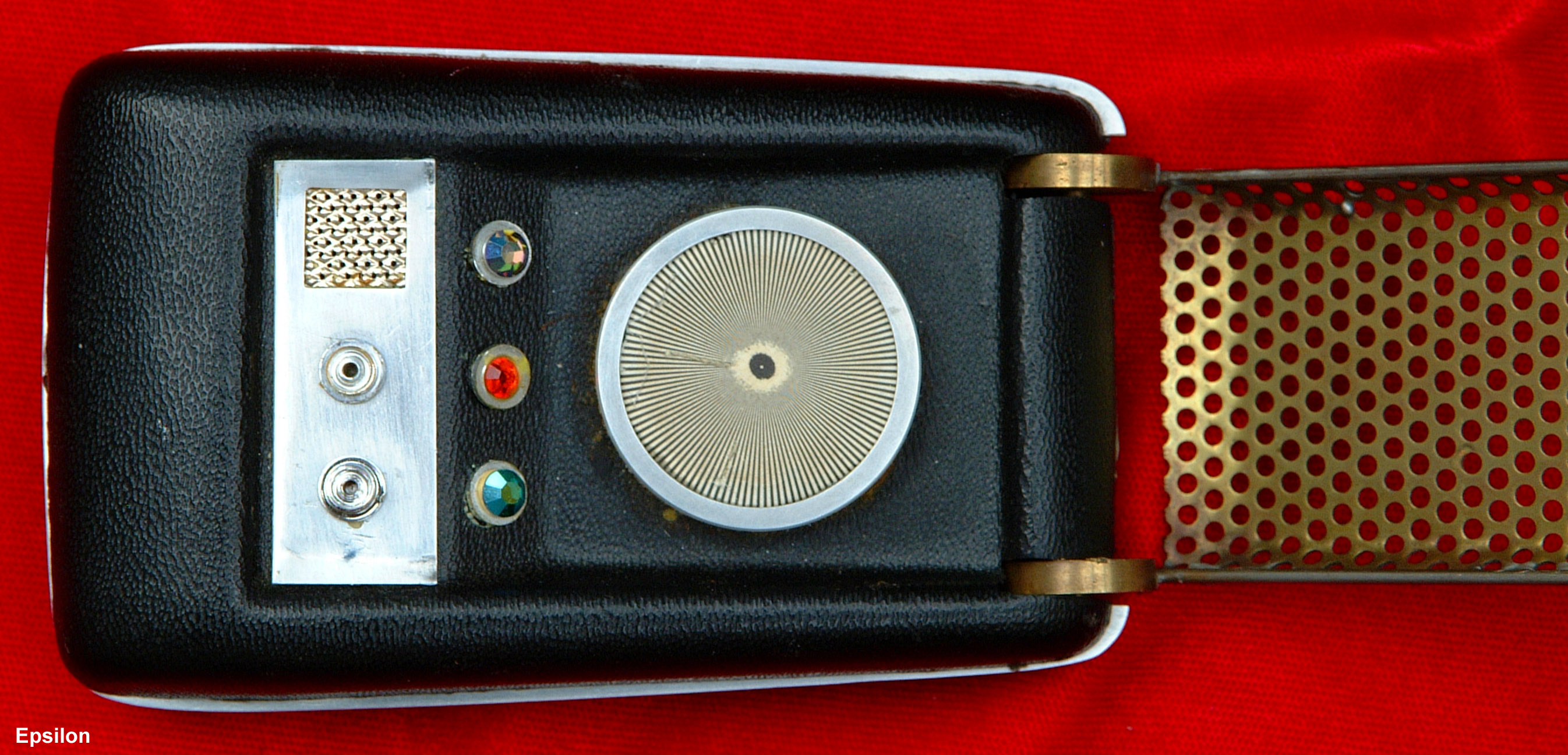
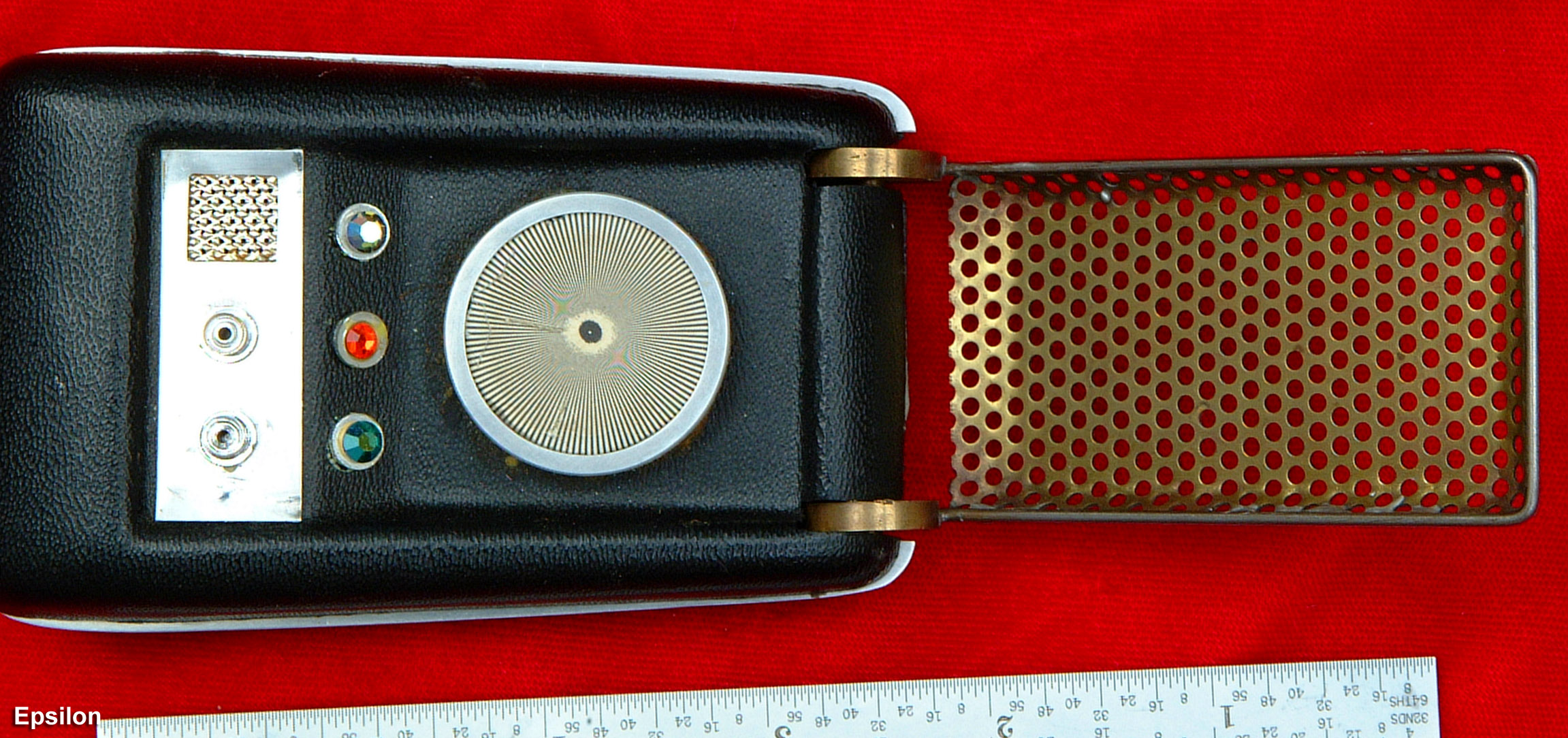
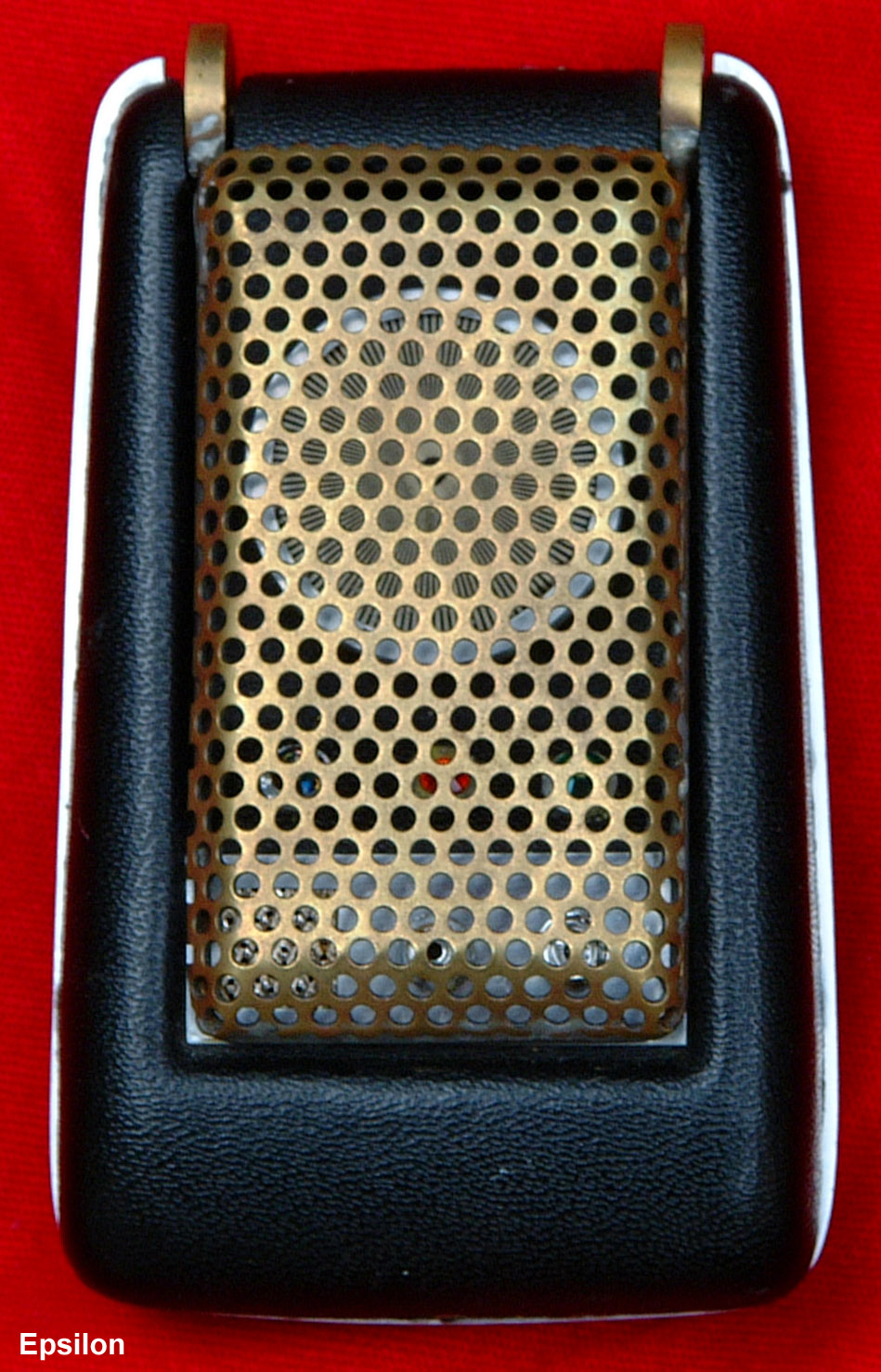
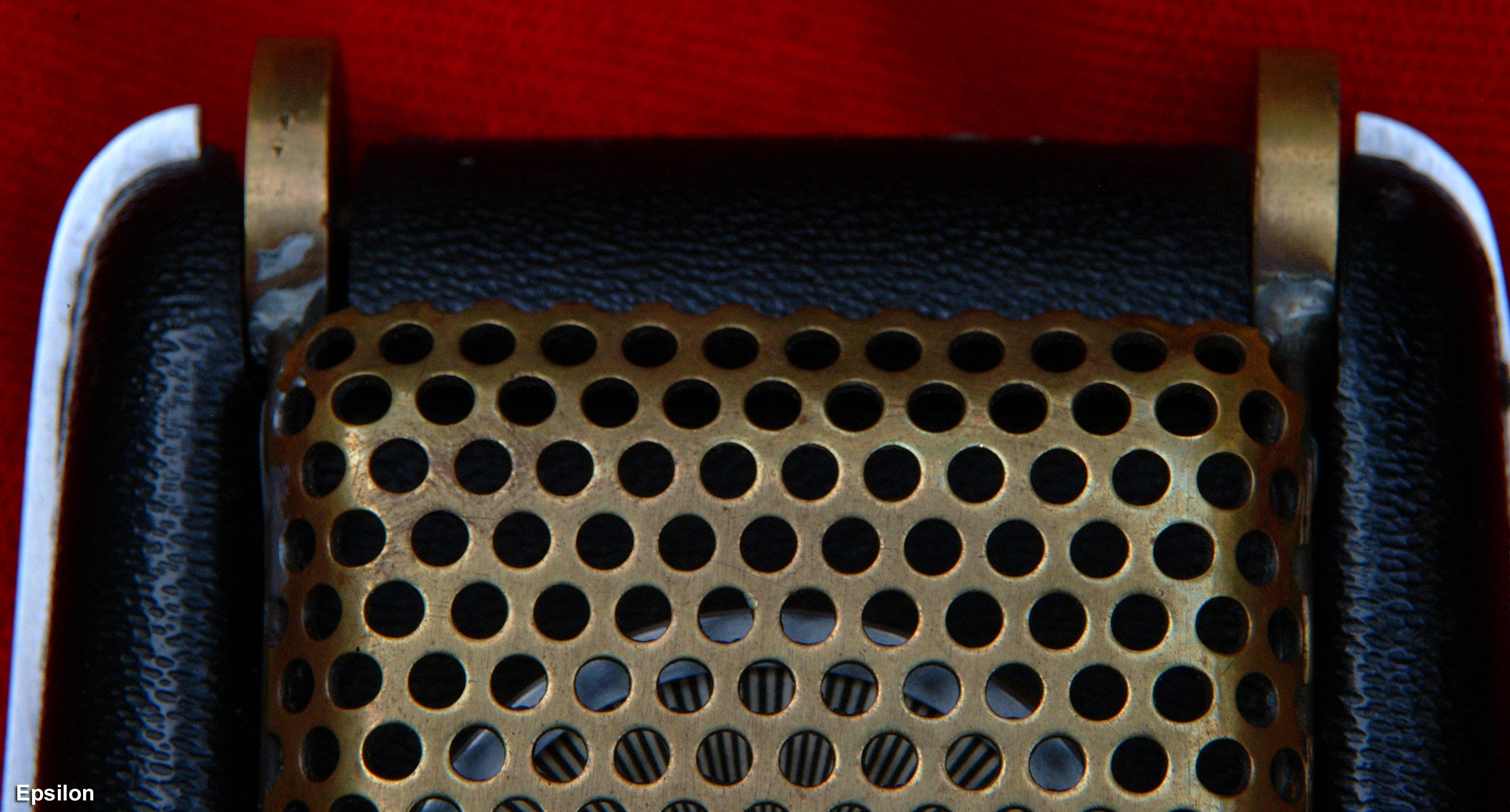
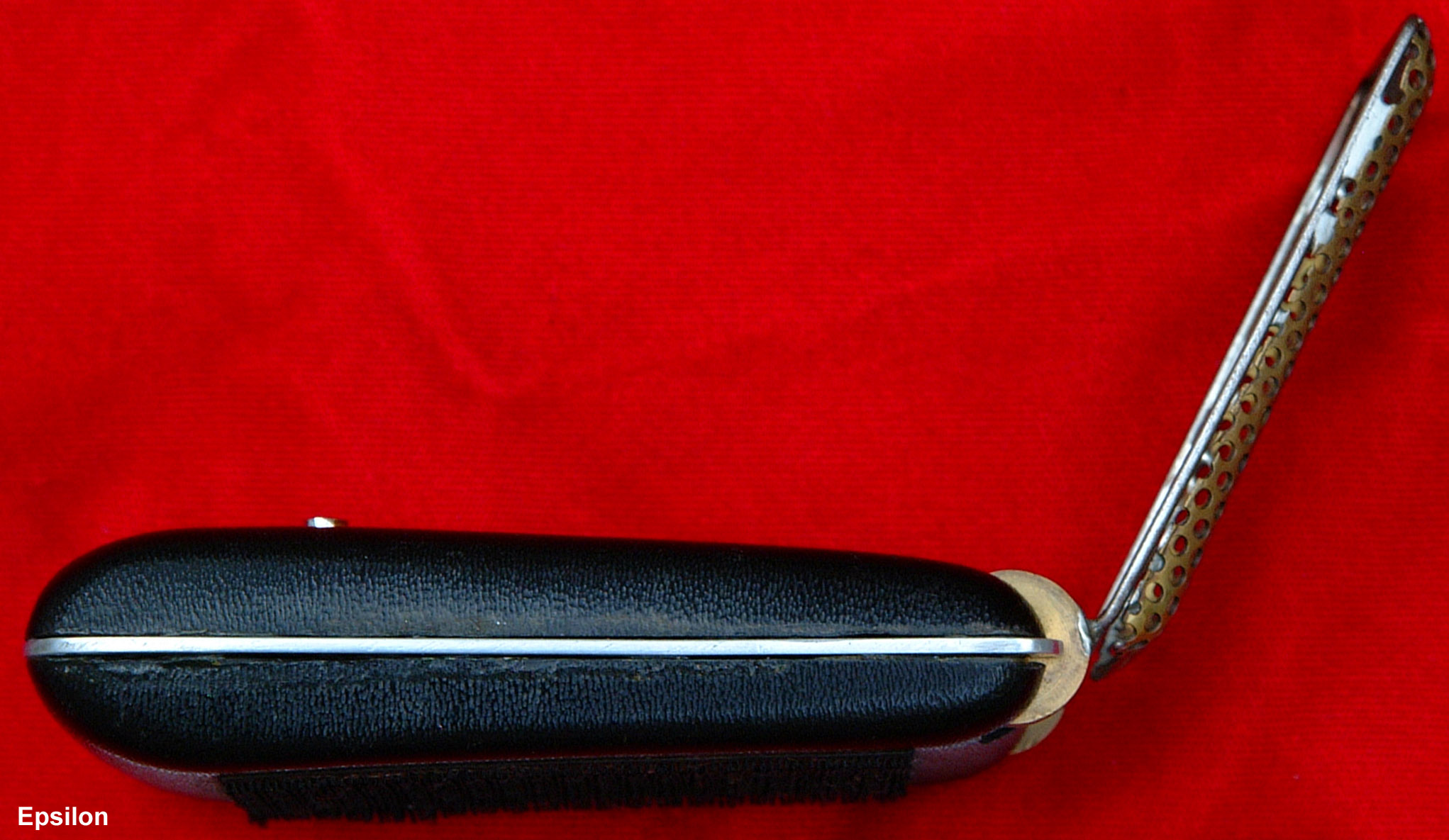
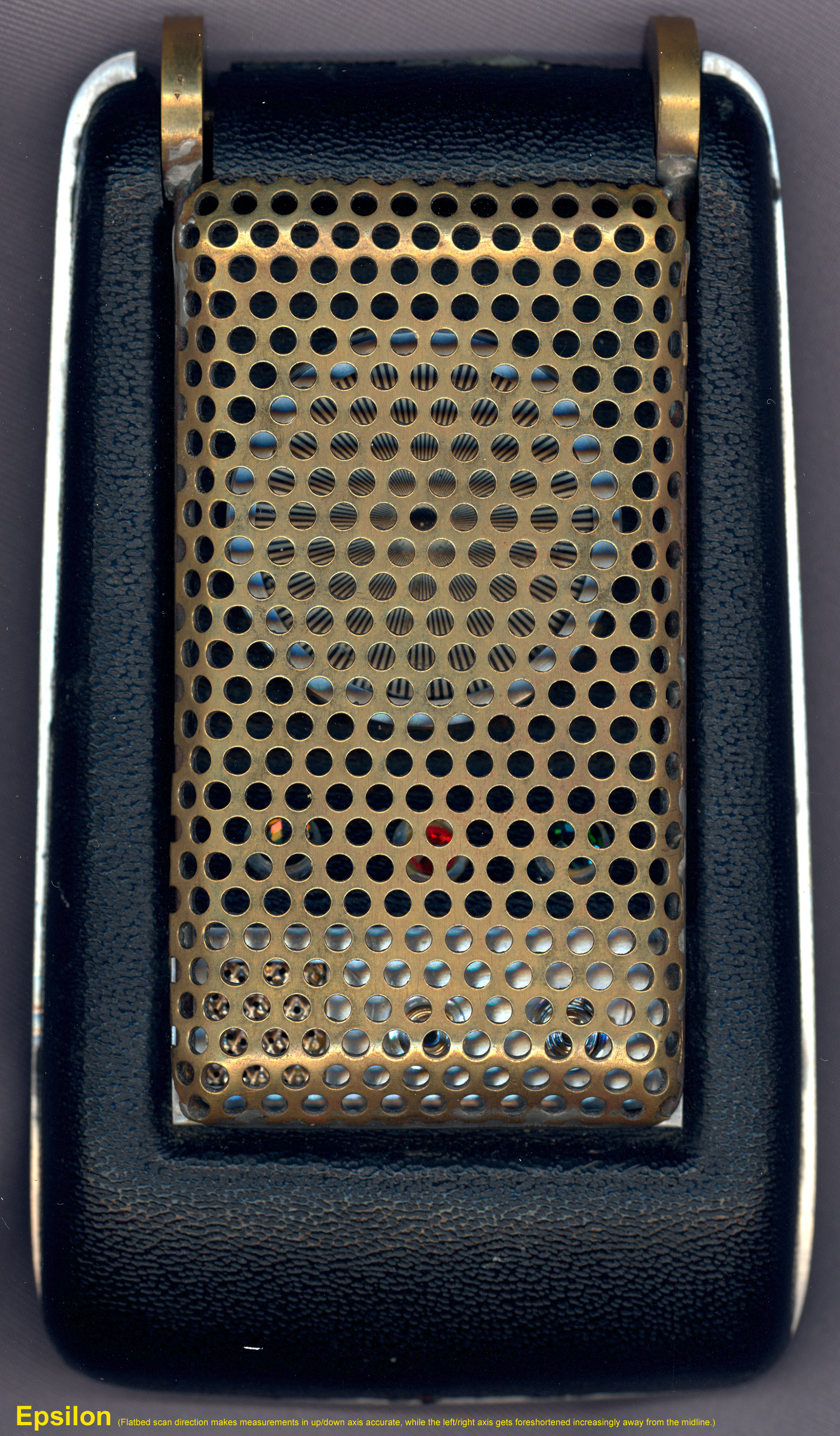
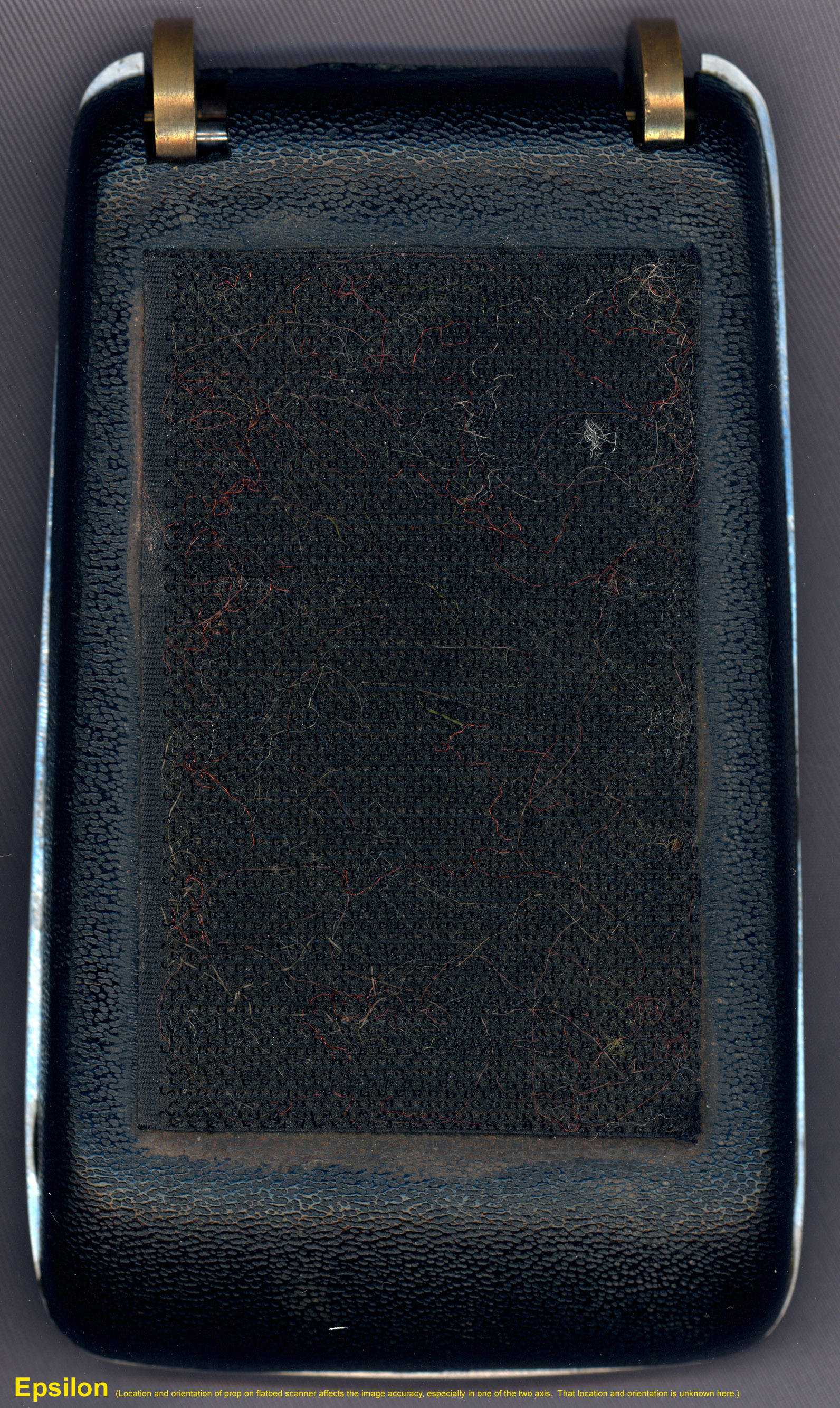
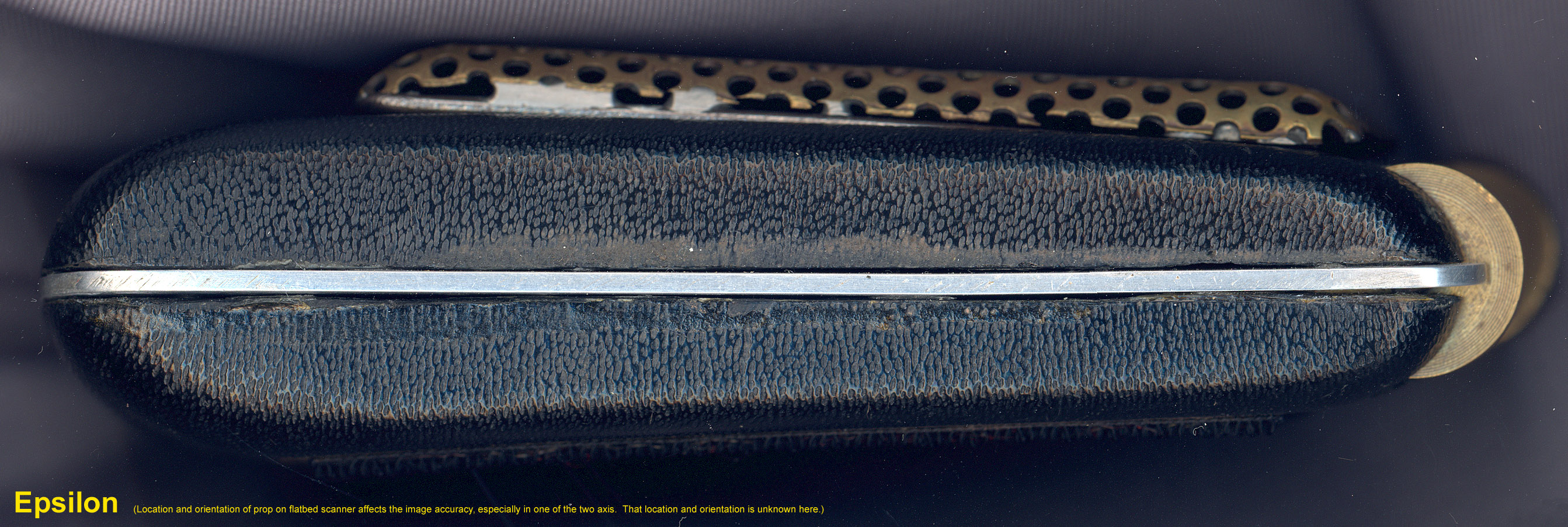
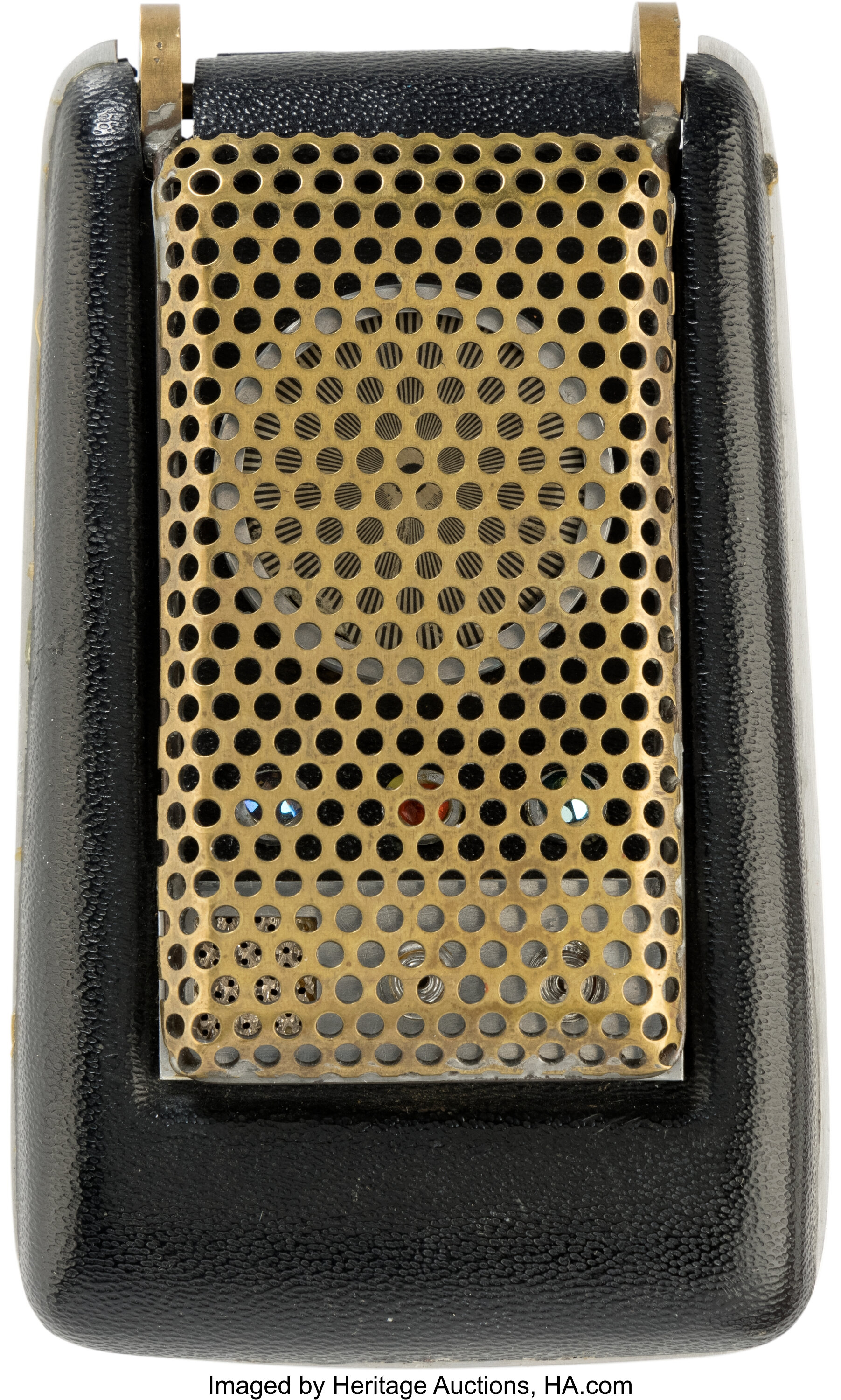
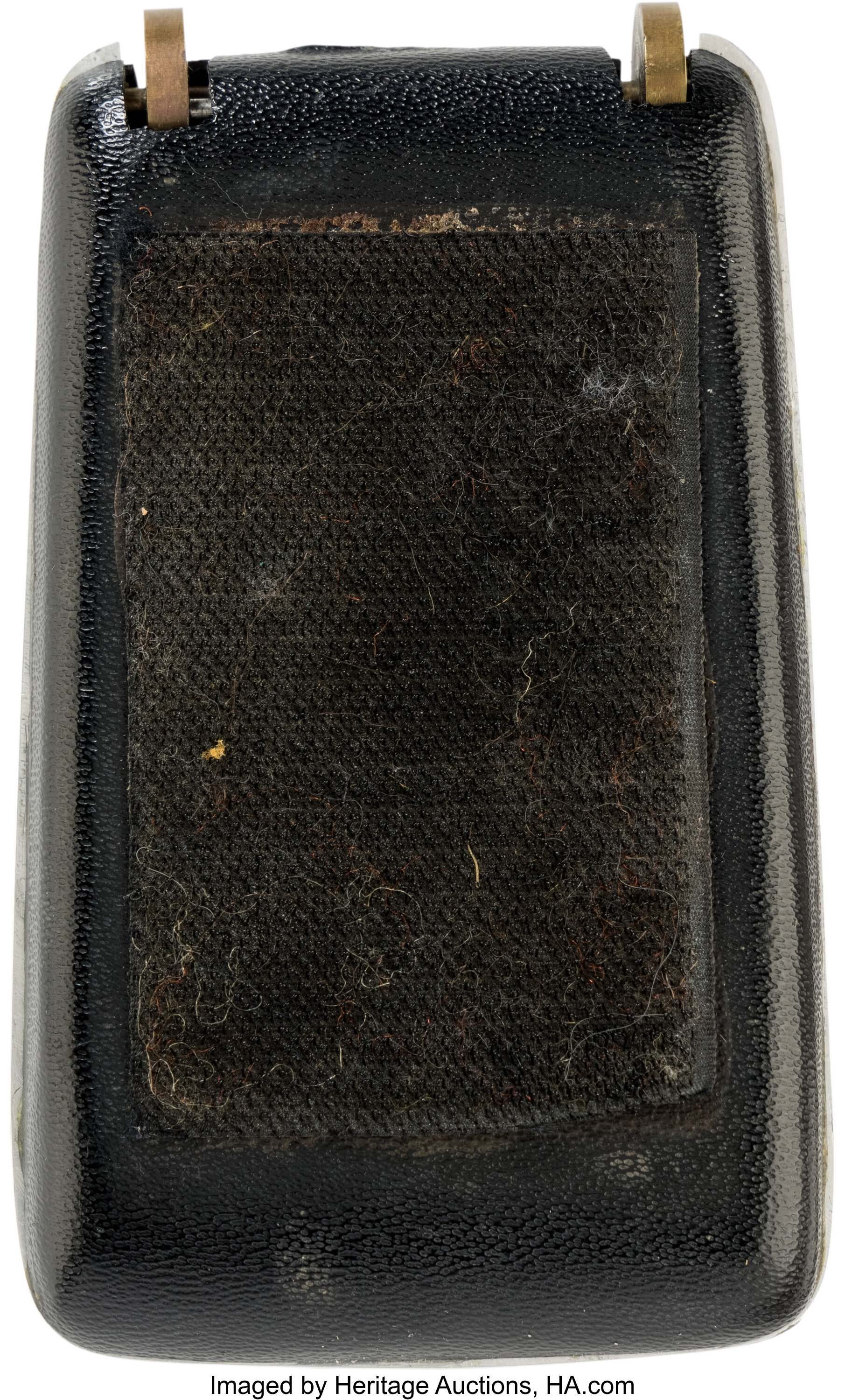
| This is the only original out of the four known surviving comms whose antenna still flips open with ease as you're accustomed to seeing on the show. It stops firmly with a satisfying "thwack." Note a wide cutout in the lower shell for the antenna hinge wheels that allows us a good view at the hinge rotation stop pin. It's also the only found original without screw dimples in the back shell. The mic grill material has the pattern's diamond peaks in the usual upward (convex) orientation. |
||
| Post-GJ Refurbishment | ||
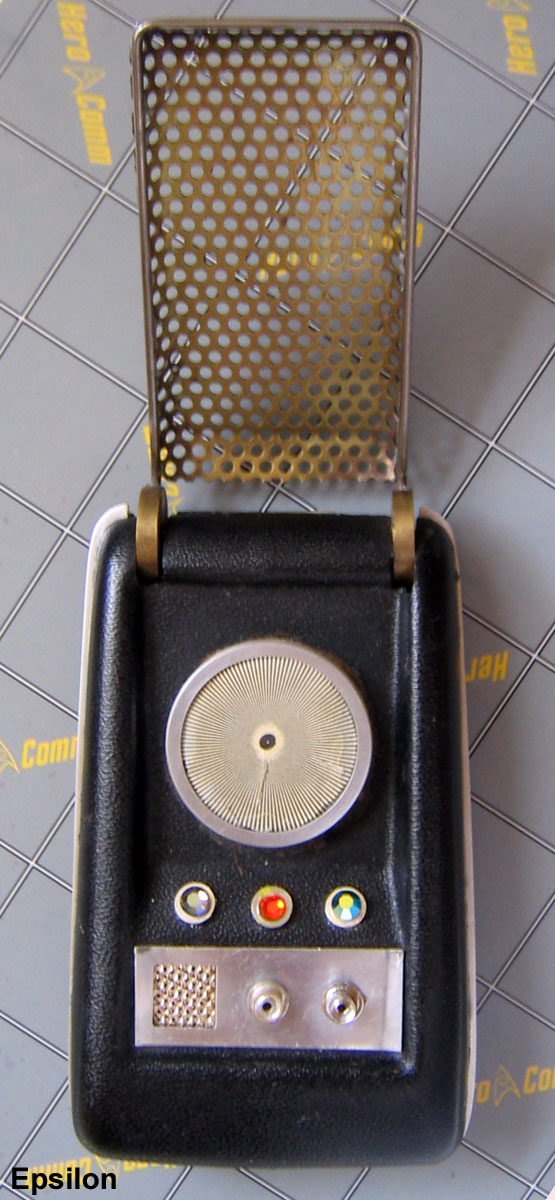 (555 x 1200) |
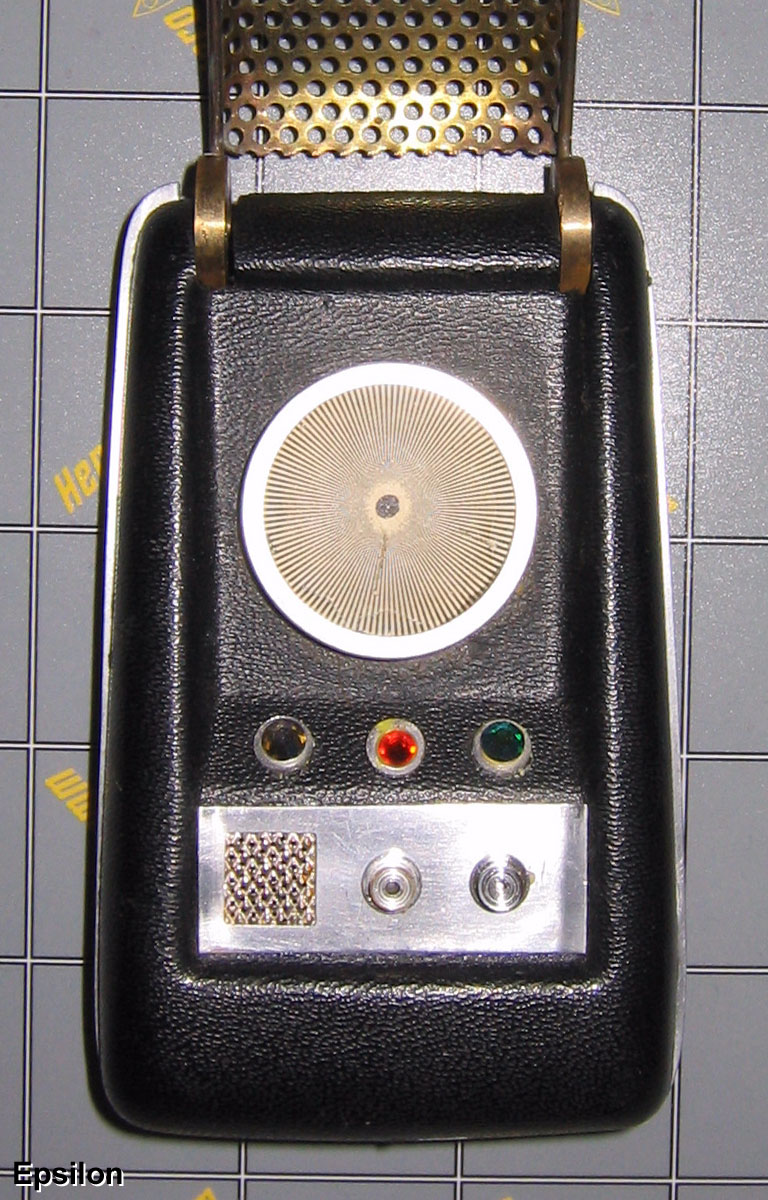 (768 x 1200) |
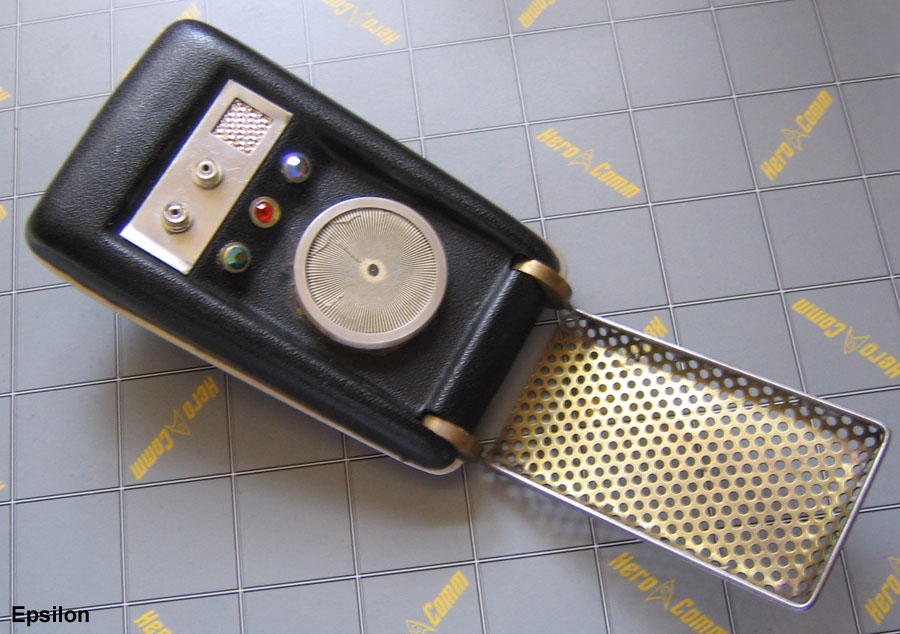 (900 x 634) |
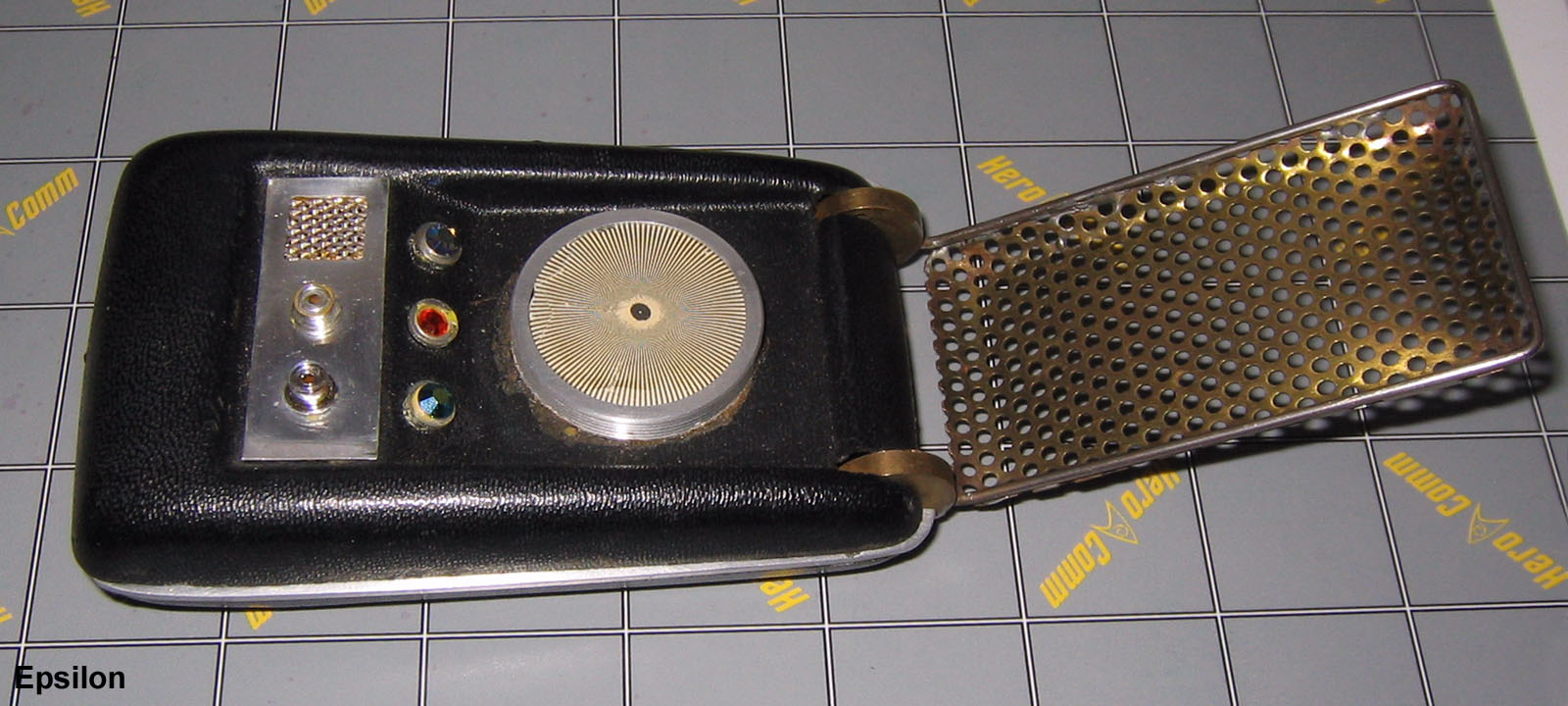 (1600 x 720) |
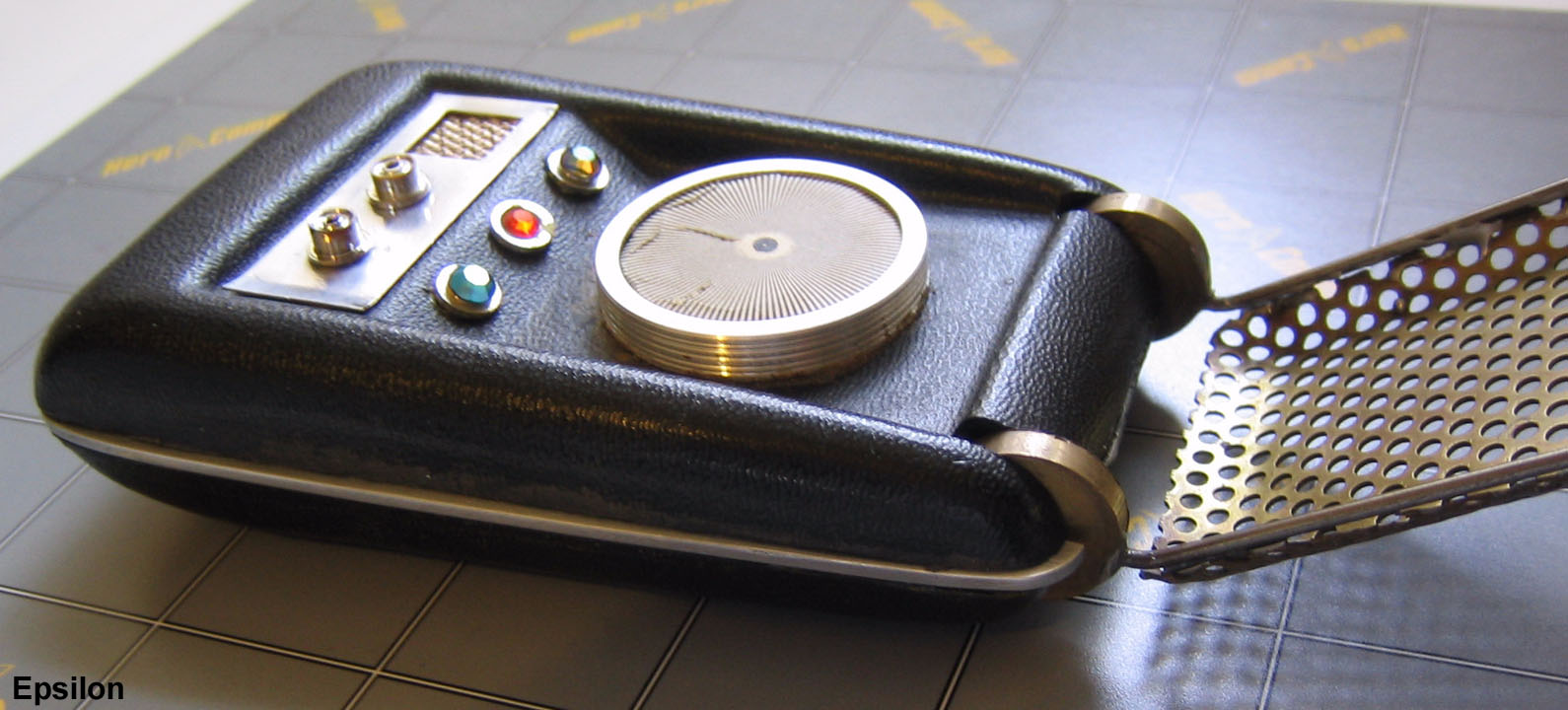 (1600 x 720) |
 (1200 x 795) |
Just about the only odd feature on this otherwise average comm is the antenna wire is steel and not the usual brass. |
||
 (1200 x 657) |
 (900 x 481) |
 (900 x 520) |
 (900 x 510) |
 (900 x 487) |
 (1200 x 767) |
 (1200 x 767) |
 (1200 x 753) |
 (960 x 321) |
 (1400 x 504) |
 (1400 x 504) |
 (2748 x 2172) |
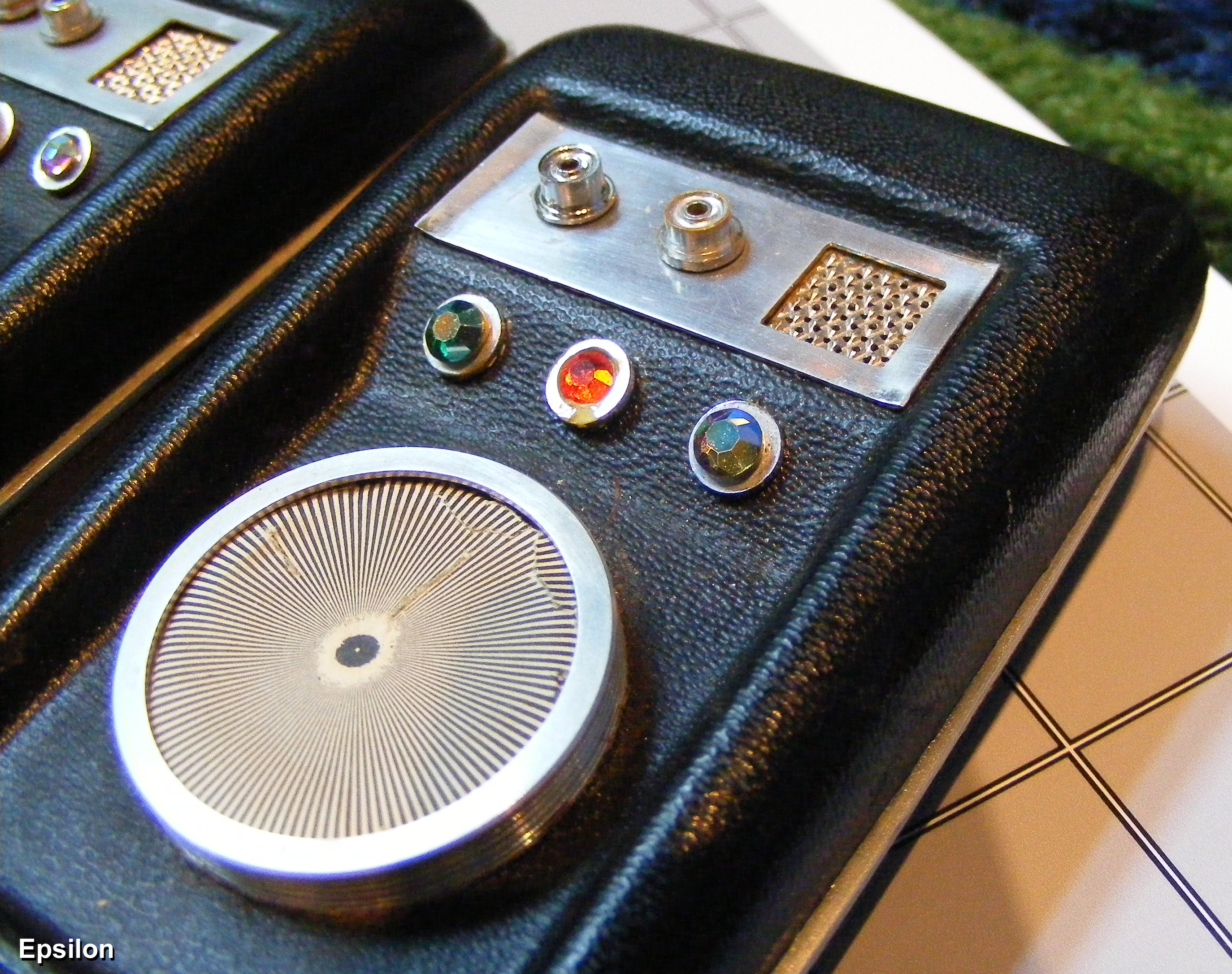
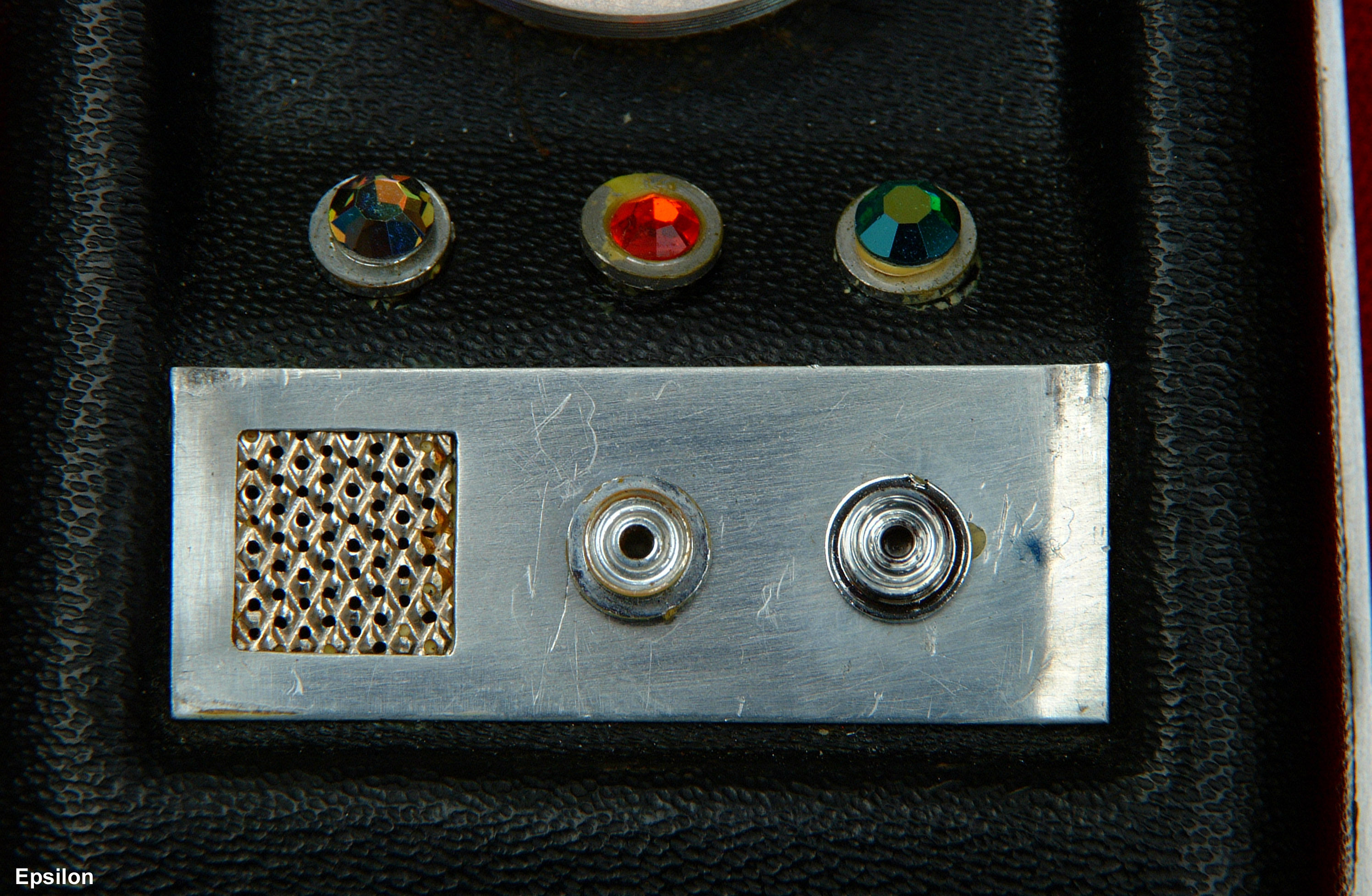
| Thanks to Greg Jein for taking these above photographs (except for the last one) for our website. For edge shots, he propped it up against some small jars with black lids (in case you were wondering). The pictures below were taken to guide the Master Replicas communicator offering in 2006. |
||
 (2692 x 1296) |
 (2303 x 1084) |
 (2992 x 1953) |
 (949 x 1478) |
 (2872 x 1545) |
 (2043 x 1185) |
 (1678 x 2106) |
 (1557 x 2661) |
 (1592 x 2667) |
 (2685 x 902) . |
 (3040 x 1884) |
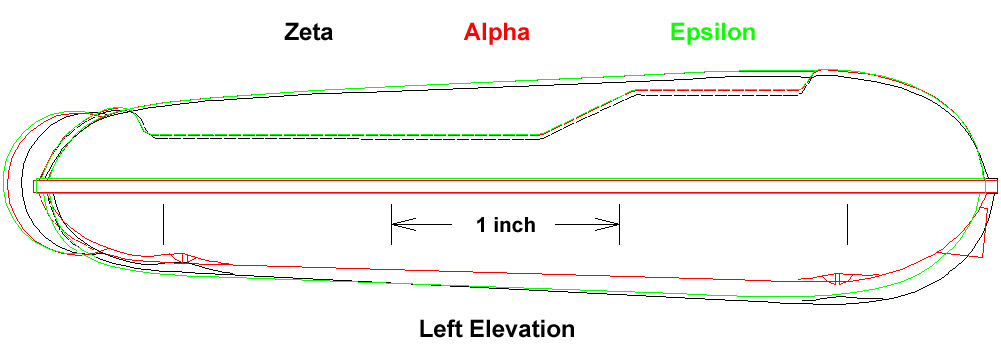 (1001 x 350) A scale drawing that compares the left elevation views of Alpha, Zeta and Epsilon, layered right atop each other. |
| 2023
Auction |
||
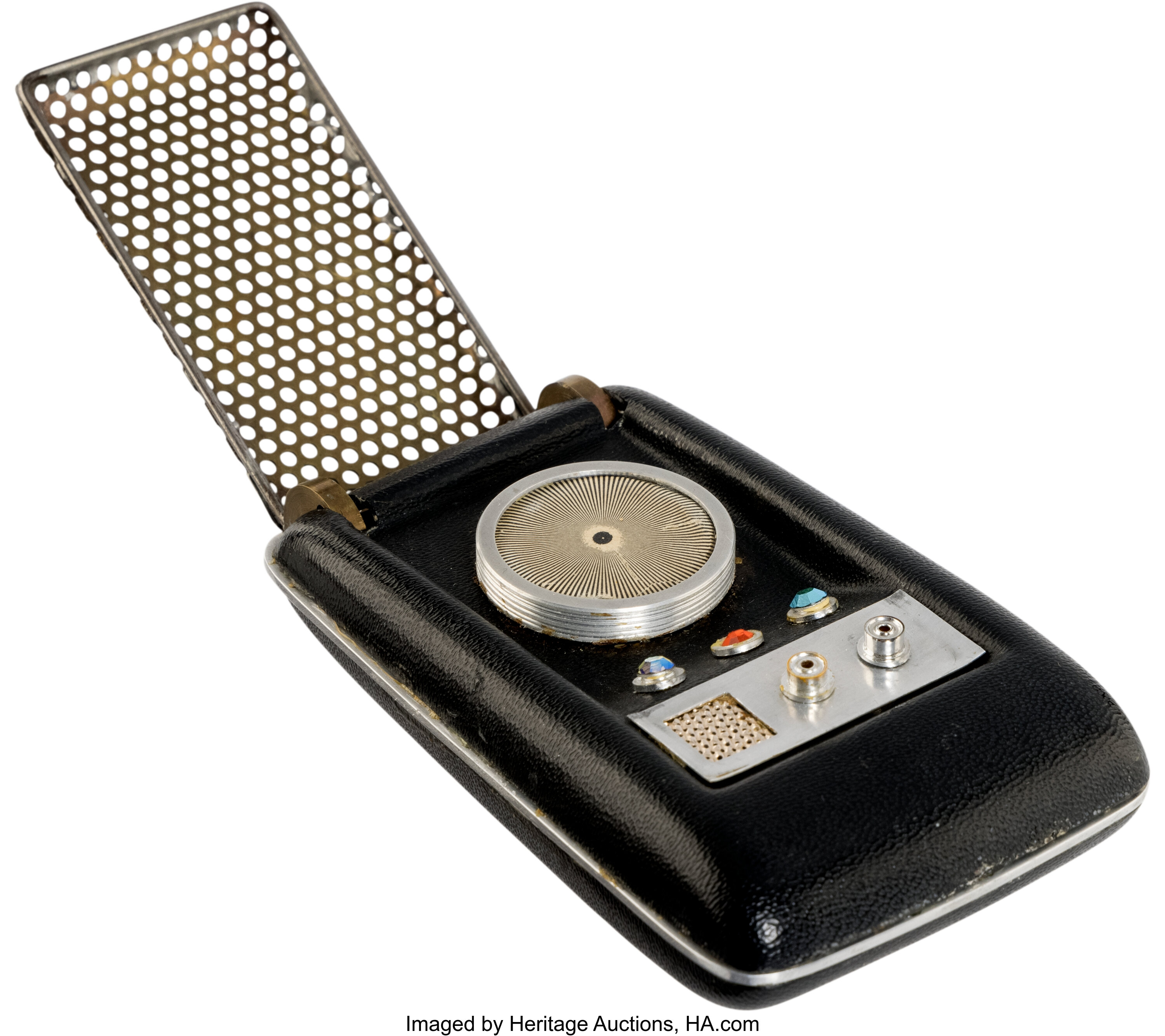
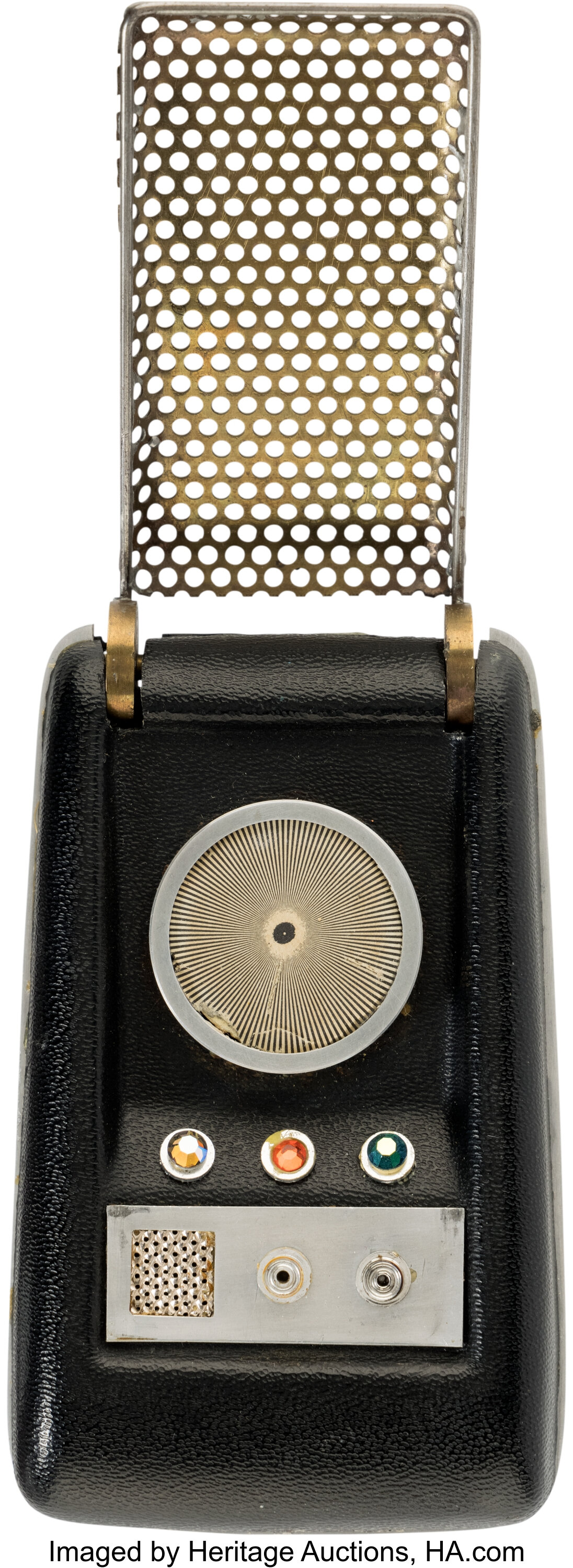
2023 Update: Here is the link to Heritage Auctions' sale page for this prop, which sold on October 14 for $156,250 ($125,000 plus 25% buyer's premium) to the same telephone bidder (#7510) who also won Zeta and many of the other TOS landing party props in Greg Jein's collection. That sale can be seen on this YouTube clip at time stamp 4:45:00. Below are the four photographs of the prop on HA's site: |
||
|
|
 (1096 x 3000) |
 (1803 x 3000) |
 (1811 x 3000) |
||
| Epsilon's Jewels | ||
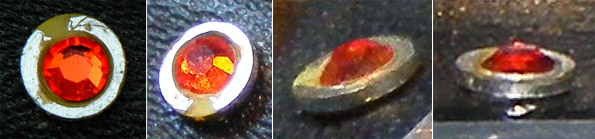
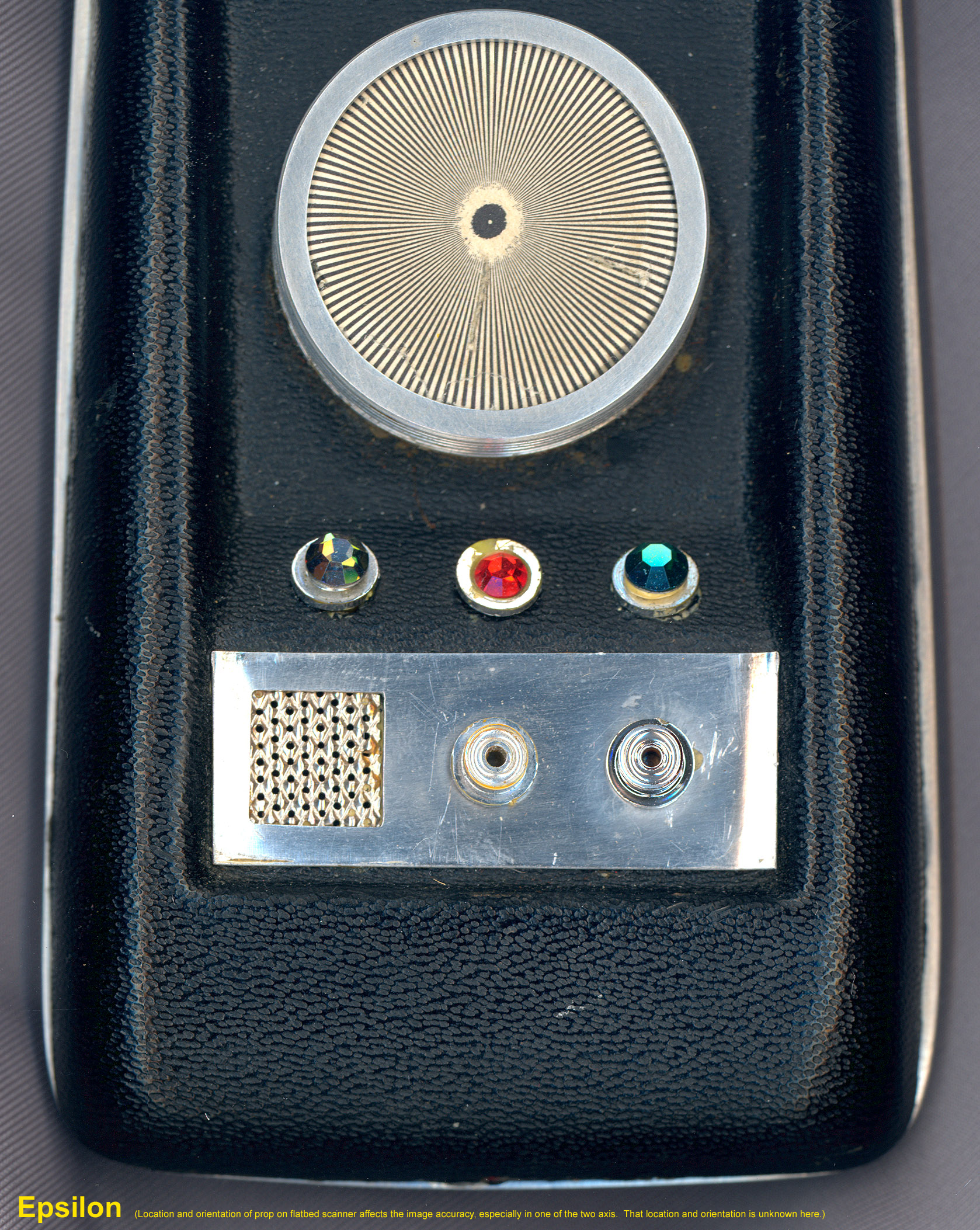
With its orange tint and flashes of yellow, the center stone is clearly a 16ss Hyacinth, atop a Type C hub that's oddly had its raised back shaved down so the gem sits at the same level as - or is even sunk a bit into - the wide rim. We have no idea why Wah did this.
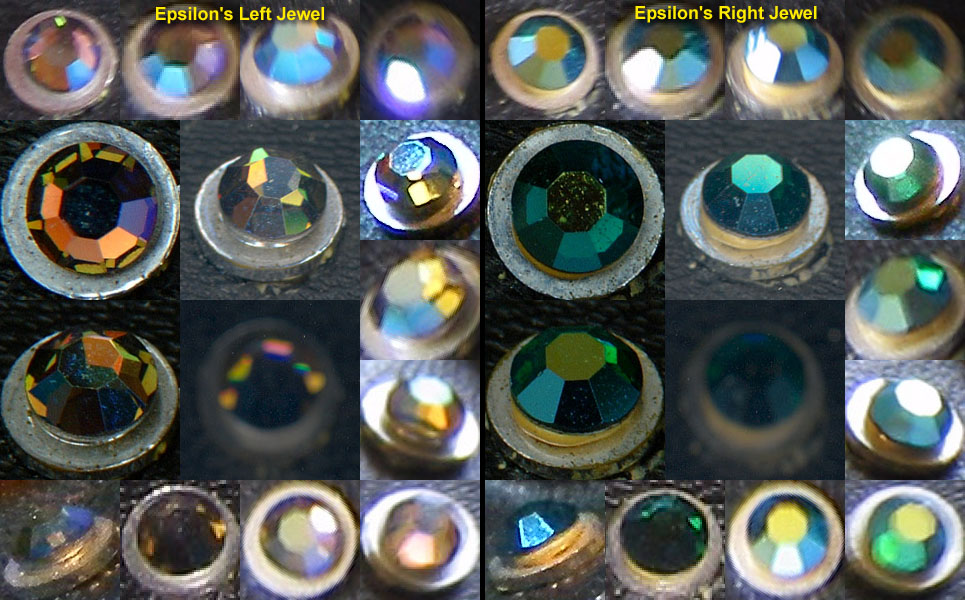
The colors of the outer stones, both 20ss and AB-coated, needed to be determined by the photos we have of this prop, which fortunately are plentiful:
The right
stone is an easy call; 20ss Emerald AB. The
left is a bit trickier, as a good number of rhinestones can render
many of those yellow, amber, blue and violet hues, but the one that
best shows all those colors is a 20ss Black Diamond
AB. |
||
| Left |
Center |
Right |
||
 |
 |
 |
||
| Top Choice Other
Possibilities |
20ss Blk. Diamond AB 20ss Light
Sapphire AB |
16ss Hyacinth |
20ss Emerald AB |
|
| Epsilon's
Moiré
Pattern |
||||
|
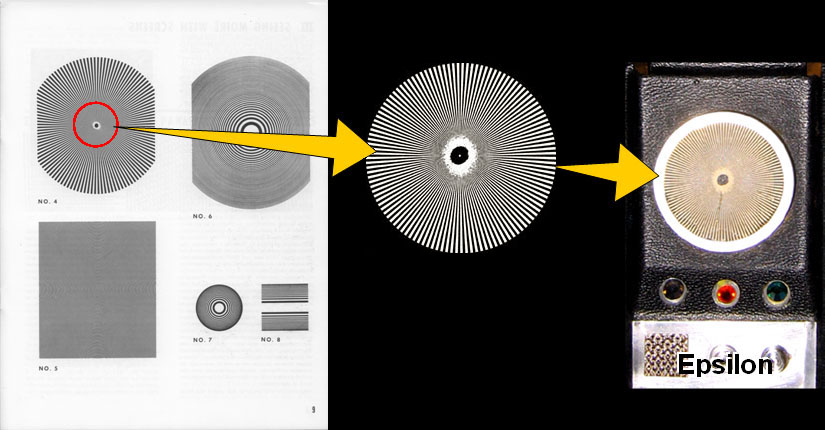
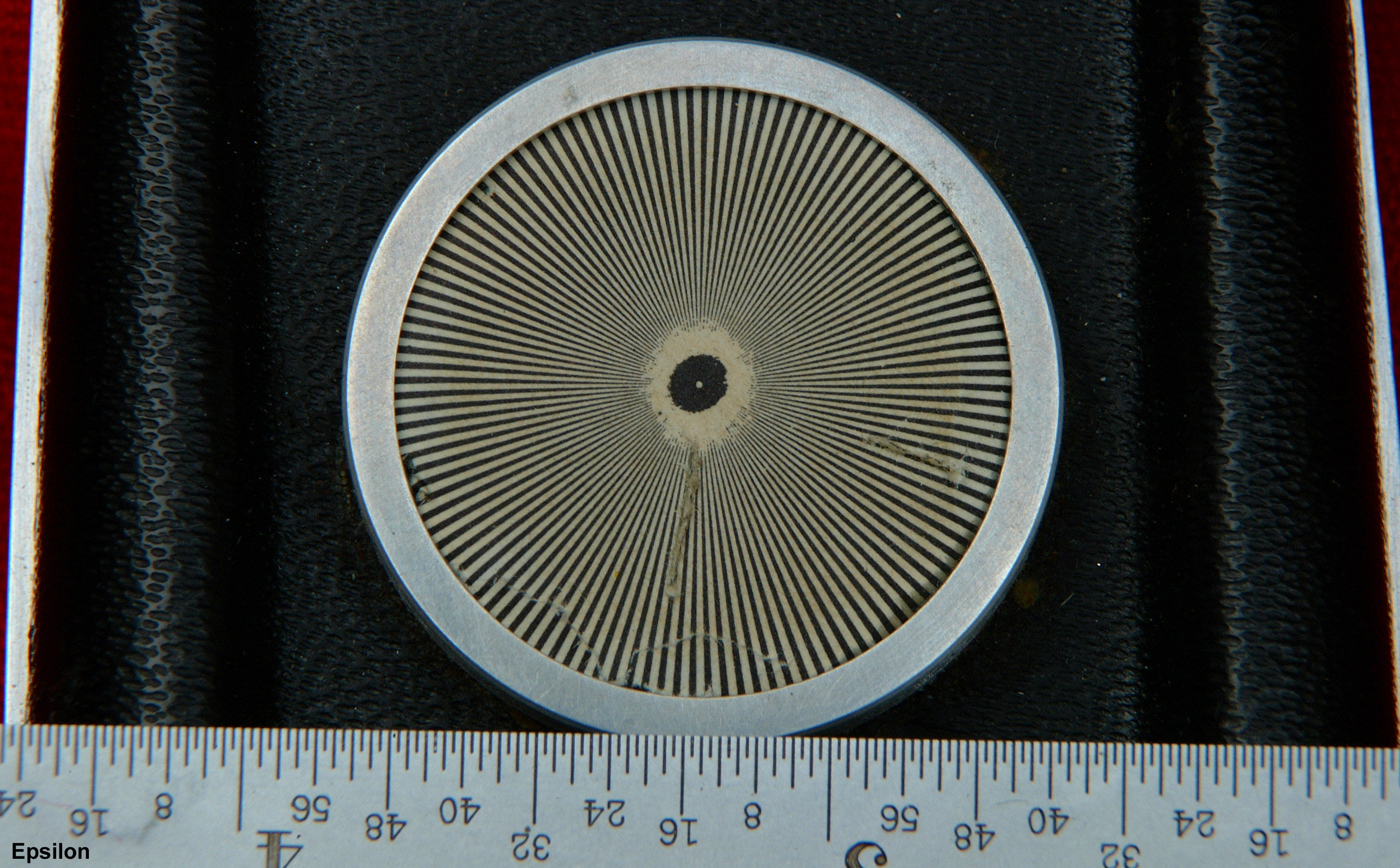
Wah cut this comm's Pattern #4 radial image from Page 9 of Edmund Scientific's The Science of Moiré Patterns book:
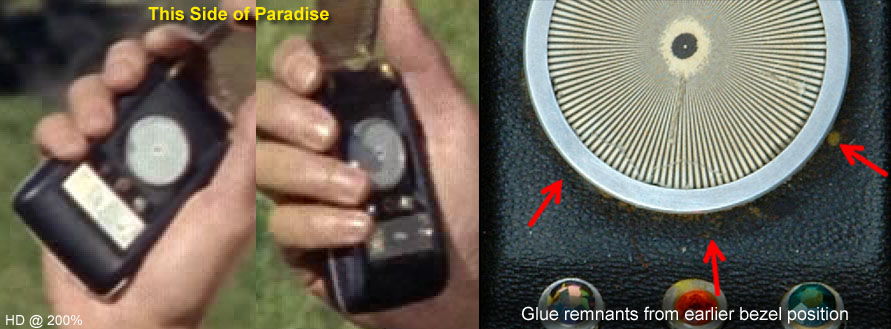
The moiré bezel ring was once located lower in the control well than it is now. In This Side in Paradise, late in Season 1, it's seen near the bottom fold. The residue of the glue that held it on then can be spotted on the shell today. We believe it is now more centered (after its GJ refurbishment) over the round hole Wah cut in the shell:
More
information on its moiré pattern can be found on our A
Moiré Story page.
And a high-resolution
print-ready scan of the original source material can be found here. |
||||

|
||||
| Star Trek is a Registered and Copyrighted Trademark of Paramount Pictures. All Rights Reserved. All subject matters referring to Star Trek are trademarks of Paramount Pictures. Extra material can be found here. This website has not been produced or endorsed by Paramount Pictures. Any material belonging to Paramount’s Copyrighted Material that may appear on this site complies with fair and/or acceptable use for the purposes of review, study, criticism, or news reporting. |