|
|
 ... How to Spot a Forgery
| A forgery (or "fake" - used here interchangeably) is simply a replica that is purported by an owner or seller to be genuine. Sometimes the origins of this mistaken identity are accidental. However, with TOS communicator props, they have frequently been anything but. The Mark English ("ME") forgeries constitute the vast majority of those replicas intentionally pawned off as originals. In their day during the 1980s and 90s, the MEs fooled even the most knowledgeable experts at the time. Mailing out of Rhinebeck, NY, the man sold an unknown but substantial number of communicators, phasers and tricorders that seemingly had all the trimming of the genuine article. In particular his comms, based on an actual prop he is reported to have possessed for a time, cleverly incorporated some small authentic features and manufacturing quirks usually not seen in a "clean" replica. There is often a crudeness associated with the construction, dismissed by their advocates as evidence of Wah's hasty craftsmanship or of on-set repairs. Similarly, to show what people would expect in a half-century old prop, a pronounced aging effect was often applied to the brass antenna mesh. The originals, by contrast, were created with a discernable higher level of care and have weathered the years fairly well. All of these specific differences, or "tells" as they are known in the biz, can today allow one to instantly pick out a fake, even from the smallest of pictures. Today, ME fakes are everywhere, having already been sold to the next generation of unwitting collectors. As these have been accompanied by COAs (Certificates of Authenticity) either faked or signed by equally unsuspecting prop afficionados or agents, some owners today may still believe their MEs are real. Regrettably, of all the communicators that have been sold through accredited auction houses, EVERY SINGLE ONE has been a fake... except for four; Profiles In History's 2001 sale of Delta, owned for 32 years by TOS Set Decorator John Dwyer, Heritage Auctions' 2023 sale of Epsilon and Zeta from Greg Jein's famous collection, and Julien's 2024 sale of the Beta hero. And you can just ignore anything you've ever seen up for bid on eBay. Note - just because your old communicator prop does not exactly match this one below does not mean yours is then authentic. After all, it must also clear a much higher bar of perfectly matching a still-unaccounted-for comm and have all the details of known originals. Many variations can be seen among known forgeries, likely resulting from different people having done the work. Basically, if your comm has ANY of these tells, it's assured that it is unfortunately a replica. |
|
| THE "TELLS" TO A TYPICAL MARK ENGLISH (ME) FORGERY: |
|
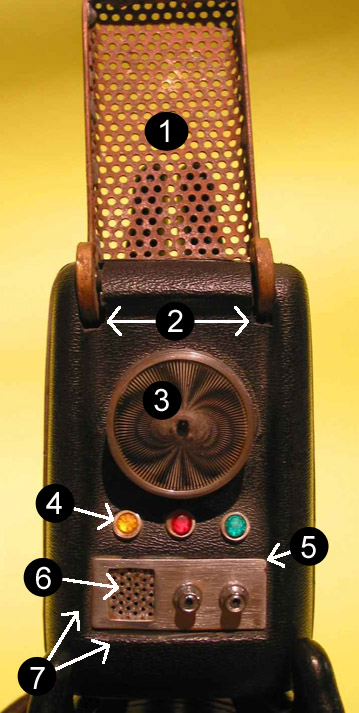 |
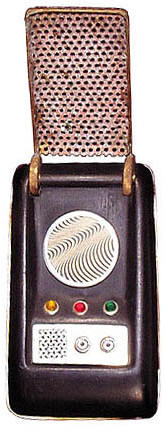
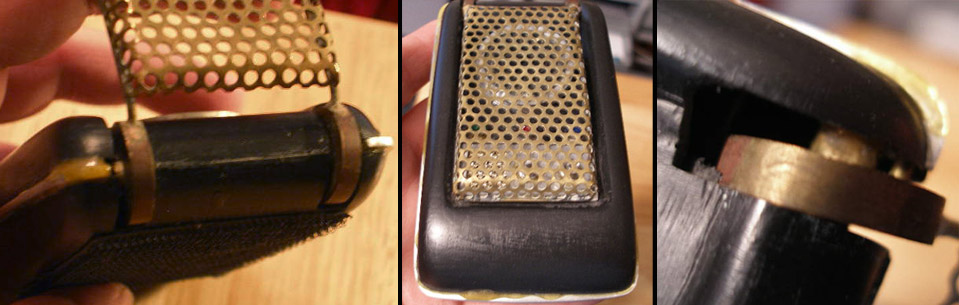
1. Pronounced brass antenna aging. Originals have so far been seen as still smooth and clean, with only a light patina. Not seen in this example, but sometimes the perforation holes are also the wrong size - being too large or too small. See below. 2. Antenna hinge wheels are large and crooked; the slots they fit into are cut both crudely and extend too far into the flat surface of the control recess. Originals had cleaner slots that end pretty much right at the bottom of the back recess fold. 3. The moiré insert is a complete two-layer radiating "spider" pattern. While this is seen in the motorized heroes, it has not been observed in any dummy, where the bottom paper layer has always been of a different pattern altogether (illustrated here). 4. Jewels are plastic instead of glass, lacking sparkle. Bright yellow, green, or blue are colors that are not found in any screen cap image. Often, they are mounted on inverted N-gauge train (instead of slot car) wheels, as shown here:
5. The control panel is cut with wavering outside edges, and many corners both on the outside and in the "mic-grill" rectangular cutout are very rounded. Originals are seen with corners cut much more crisp and sharp (shown here). 6. The mic grill is of the wrong material, using a mesh with a similar diagonal pressed pattern, but the holes have a different size and/or spacing:
7. The lower left corner of the control well has the same outward bend error that Wah Chang had in his, but is far more pronounced. 8. (Not Pictured Here) A shiny shell. All original comms were made of a semi-gloss black Kydex with a fine left/right "haircell" texture (see this for a close-up.) Many fakes have a smooth, polished look. See right below for an example. |
| MORE FAKES... |
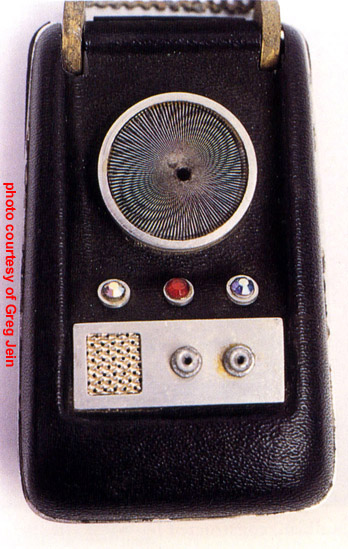
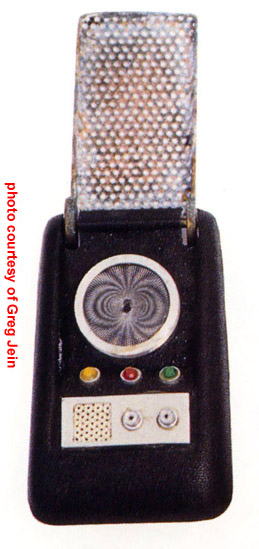
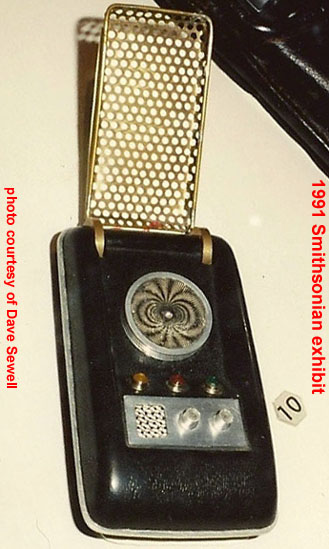 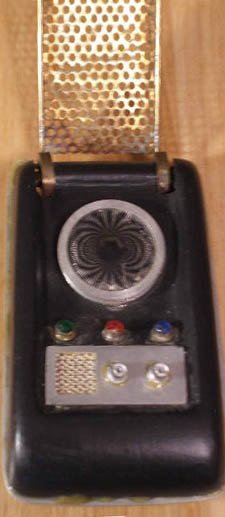
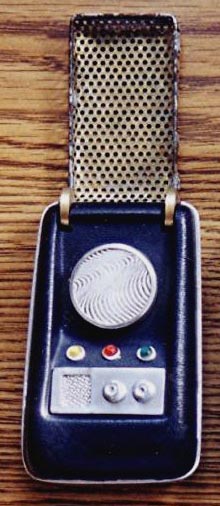 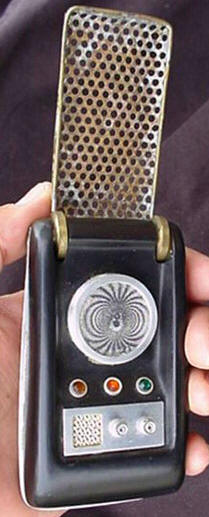
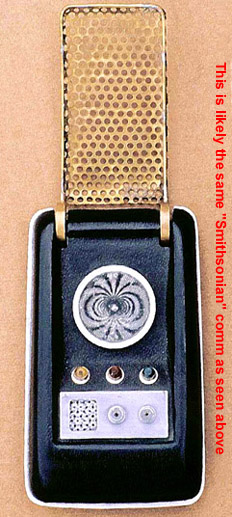 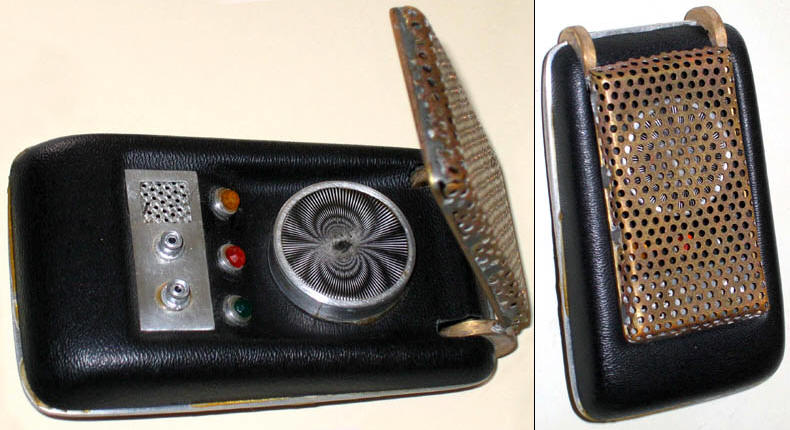
  |
| HERE'S A WELL-KNOWN FORGERY HERO... |
|
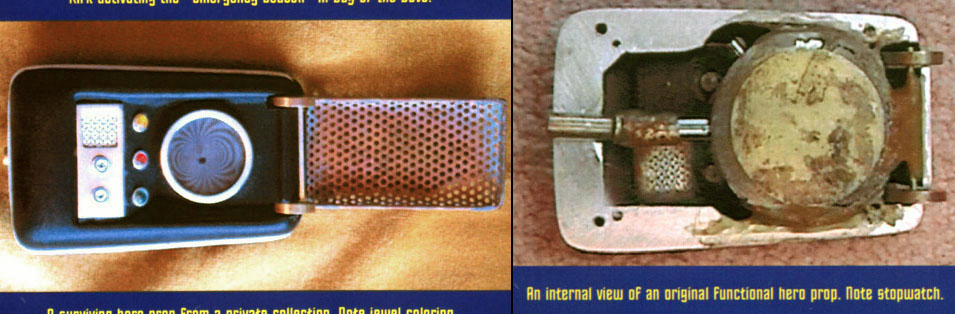
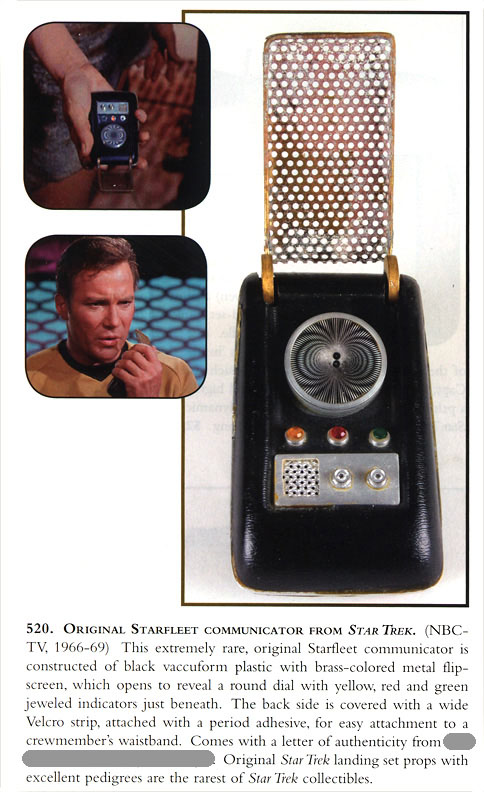
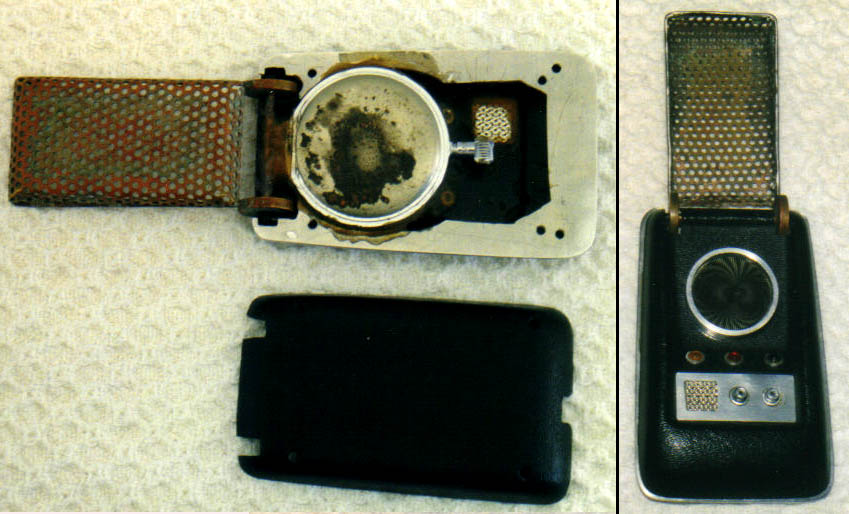
The owner of this hero prop above - which is pictured on a prominent Trek prop site - maintained this one was built by the studio shop at the beginning of the third season, since according to him, not enough of Wah Chang's ten communicators had made it that far in good condition. We consider his opinion to be wholly without merit, as the Alpha and Beta heroes (both working) as well as many of the dummies readily show up throughout the 3rd season. In contrast, no comm prop with hinge wheels protruding deeply into the control well recess as this one has (a consistent ME tell) is seen in the show - EVER! This combined with our knowledge that a well-known collector first purchased this very prop directly from Mark English (back before anyone knew better) informs us there is zero chance this is an authentic Star Trek prop. These photos above come from a Masterpiece Replicas booklet published with their 2004 communicator replica (their text is included to verify the source), in which no copyright restriction is stated. |
| ANOTHER FORGERY HERO, LIKELY FROM THE SAME MAKER... |
 |
| A FAKE THAT OBTAINED MAJOR AUCTION PROVENANCE... | |
|
|
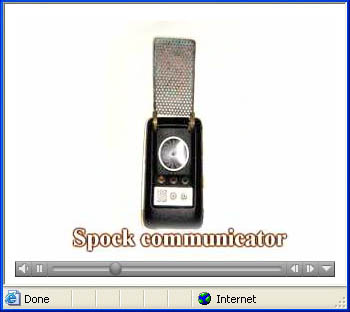
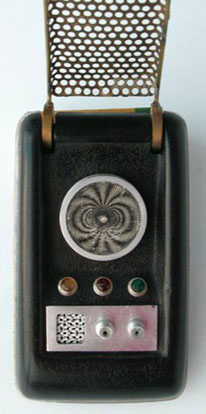
Our information has it the prop on the left was sold by a prominent auction house after getting provenance signed by John Dwyer, but that was several years after he had already sold Delta, so the man was going by mere memory at that point. It was then purchased for $28,750 by, we believe, a renowned memorabilia collector (clip from his website below): Unfortunately it easily shows ME tells 1 thru 6 on the list above, while also not even remotely matching any of the well-documented real comms still unaccounted for. |
| ANOTHER - THE "1991 SMITHSONIAN EXHIBIT" FAKE - AUCTIONED OFF... |
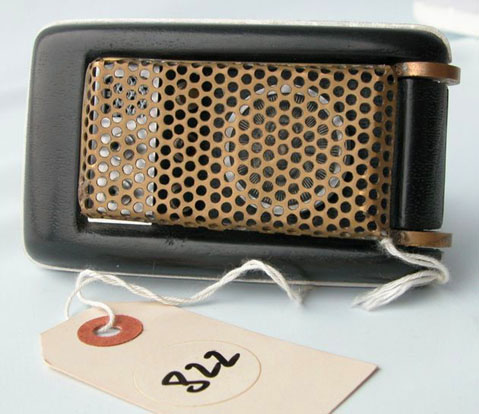
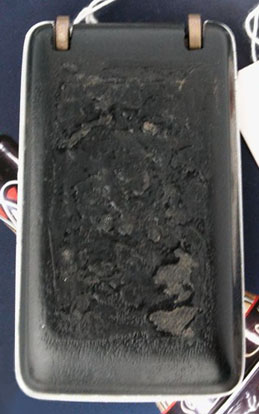 |
| STILL ANOTHER AUCTIONED FAKE... |
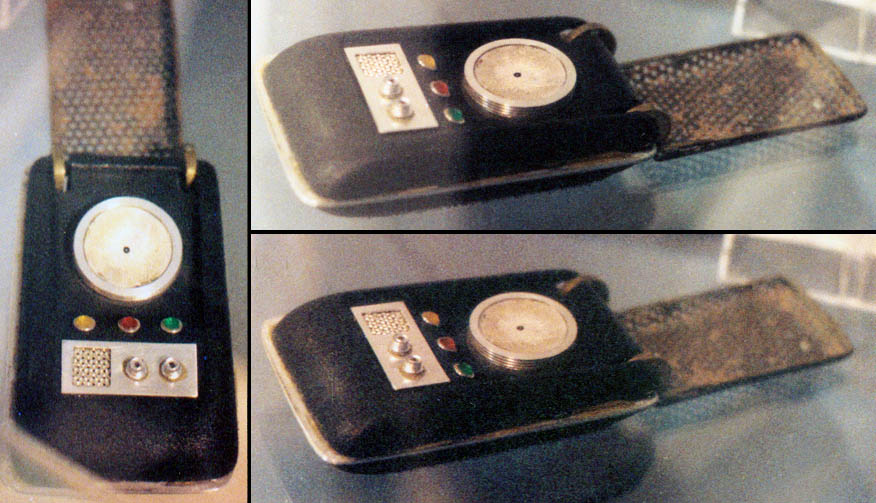 |
| A FAKE LOOKING FOR AN UNINFORMED BUYER IN 2010... |
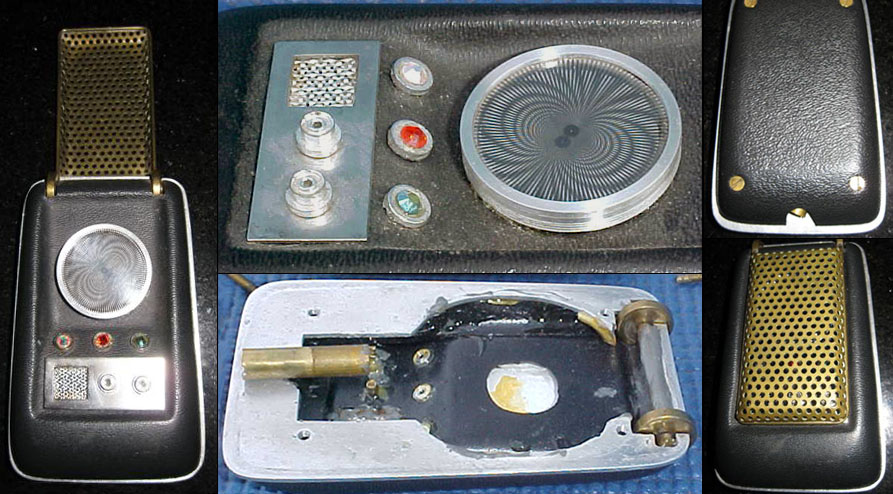 |
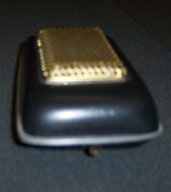
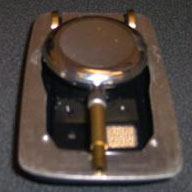
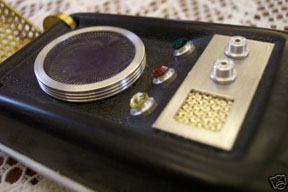
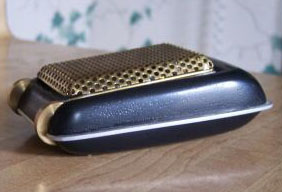
| YET ONE MORE FORGERY HERO UP FOR SALE ONLINE IN 2008... |
|
| Star Trek is a Registered and Copyrighted Trademark of Paramount Pictures. All Rights Reserved. All subject matters referring to Star Trek are trademarks of Paramount Pictures. This website has not been produced or endorsed by Paramount Pictures. Any material belonging to Paramount’s Copyrighted Material that may appear on this site complies with fair and/or acceptable use for the purposes of review, study, criticism, or news reporting. |